By CISA
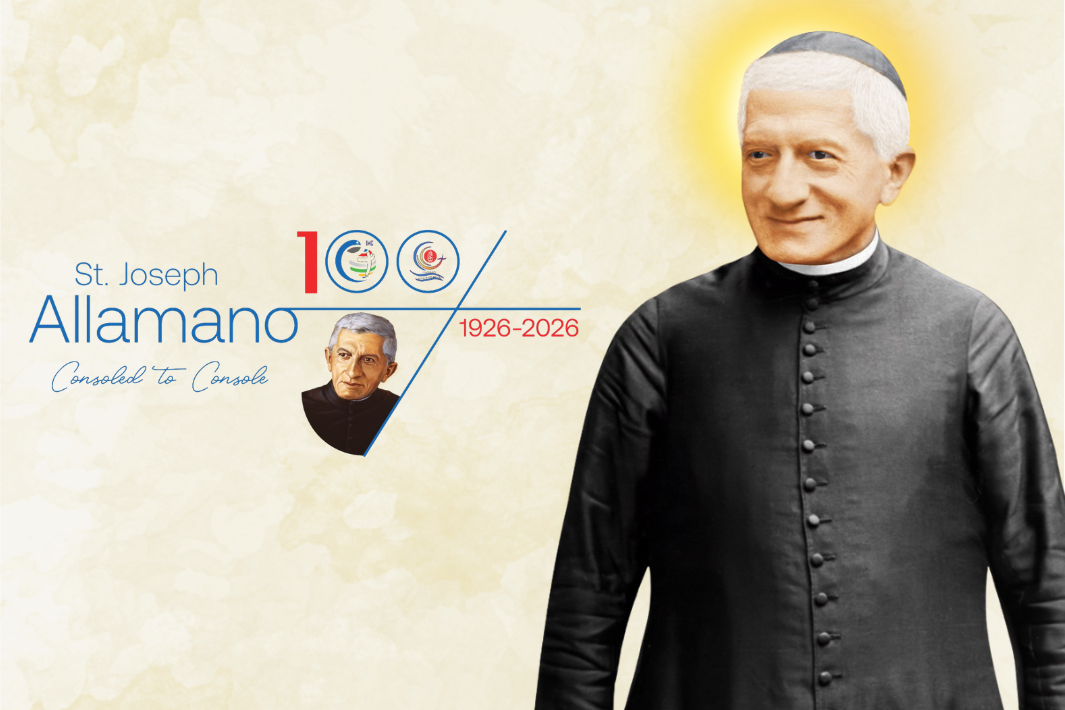
ST. Joseph Allamano was born on January 21, 1851, in Castelnuovo d’Asti, Italy. He was the son of Giuseppe Allamano and Maria Anna Cafasso, who was the sister of Saint Joseph Cafasso, a renowned spiritual director and social reformer. From an early age, Joseph grew up in an atmosphere marked by deep faith and ecclesial commitment. Between 1861 and 1866, he was a student at the Salesian Oratory under the guidance of Saint John Bosco, who served as his spiritual director and greatly influenced his formative years. After leaving the Oratory, he entered the diocesan seminary of Turin in 1866, where he undertook studies in philosophy and theology. His path to priesthood progressed steadily: he was ordained a deacon of the Diocese of Turin on March 29, 1873, and later ordained a priest on September 20 of the same year.
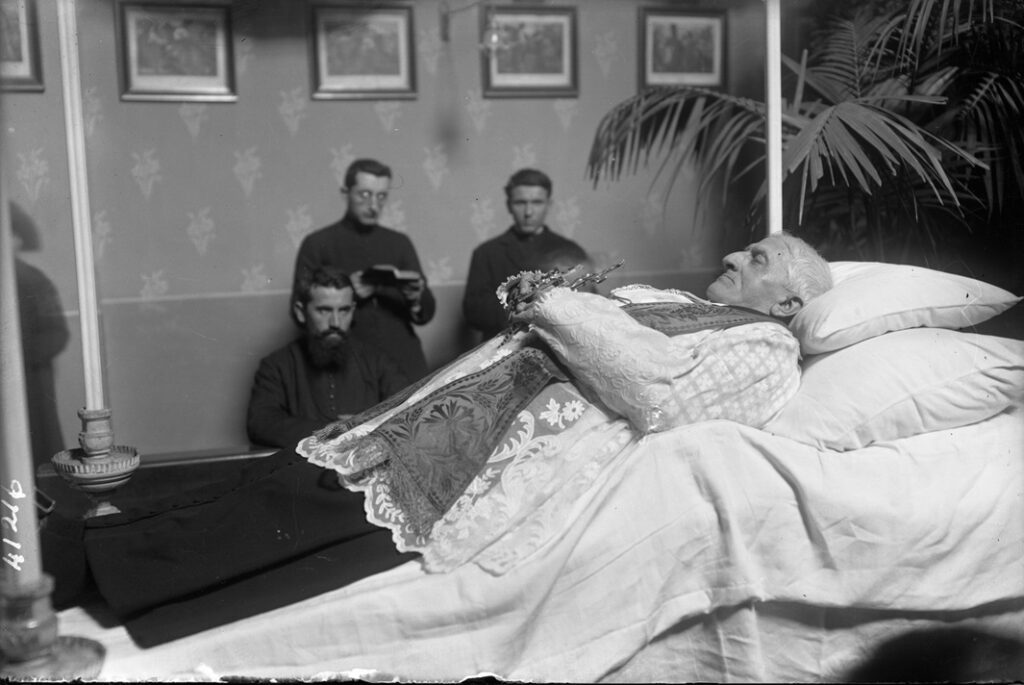
His leadership qualities and spiritual depth were soon recognized. In September 1880, he was appointed Rector of the Consolata Sanctuary in Turin, as well as head of the Ecclesiastical Residence (Convitto) and the Sanctuary of Saint Ignatius. These roles placed him at the heart of diocesan spiritual renewal, particularly in the ongoing formation of priests. Yet within his heart burned a missionary longing. Though poor health prevented him from leaving for the missions himself, he transformed his personal limitation into a broader apostolic vision. On January 29, 1901, he received the official decree establishing the Congregation of the Consolata Missionary Fathers and Brothers. Nearly a decade later, on January 29, 1910, he founded the Congregation of the Consolata Missionary Sisters. Saint Joseph Allamano died in Turin on February 16, 1926, leaving behind a missionary movement already active in Africa. He was declared Venerable by Pope John Paul II on May 13, 1989, and beatified on October 7, 1990. Ultimately, on October 20, 2024, Pope Francis declared him a Saint, recognizing the universal relevance of his witness.
Central to Saint Joseph Allamano’s spirituality was the call to holiness. Drawing from Saint Paul’s exhortation to the Thessalonians—“This is God’s will: your sanctification” (1 Thessalonians 4:3), he taught that the primary mission of every Christian, and especially every missionary, is sanctity. For him, the sanctification of all peoples was not merely an abstract theological aim but the concrete objective of missionary life. His often-repeated conviction was clear: “Souls are saved through holiness.” He insisted that one cannot make others good without first striving to be good oneself. A missionary, therefore, must first be a saint. Holiness was not an optional embellishment of missionary activity; it was its indispensable foundation. As he frequently reminded his missionaries, one cannot give what one does not possess.
The holiness he proposed was not rooted in extraordinary feats or spectacular miracles but in fidelity to daily duty. He described it as doing the ordinary extraordinarily well. Echoing the Gospel of Mark, “He has done all things well” (Mk 7:37), he urged his followers to focus less on the quantity of their works and more on their quality. True sanctity, in his understanding, lies in performing every action with care, intention, and love. Furthermore, he emphasized that good should be done quietly and without ostentation. Holiness is manifested not in public acclaim but in hidden faithfulness.
To make this demanding vision practical, Saint Joseph Allamano drew inspiration from his uncle, Saint Joseph Cafasso. He recommended three guiding principles: to do everything as the Lord would do it; to perform every action as though it were the last of one’s life; and to carry out each task as if it were the only one to be done. These maxims provided a concrete ascetical framework for integrating contemplation and action, interior life and apostolic work.
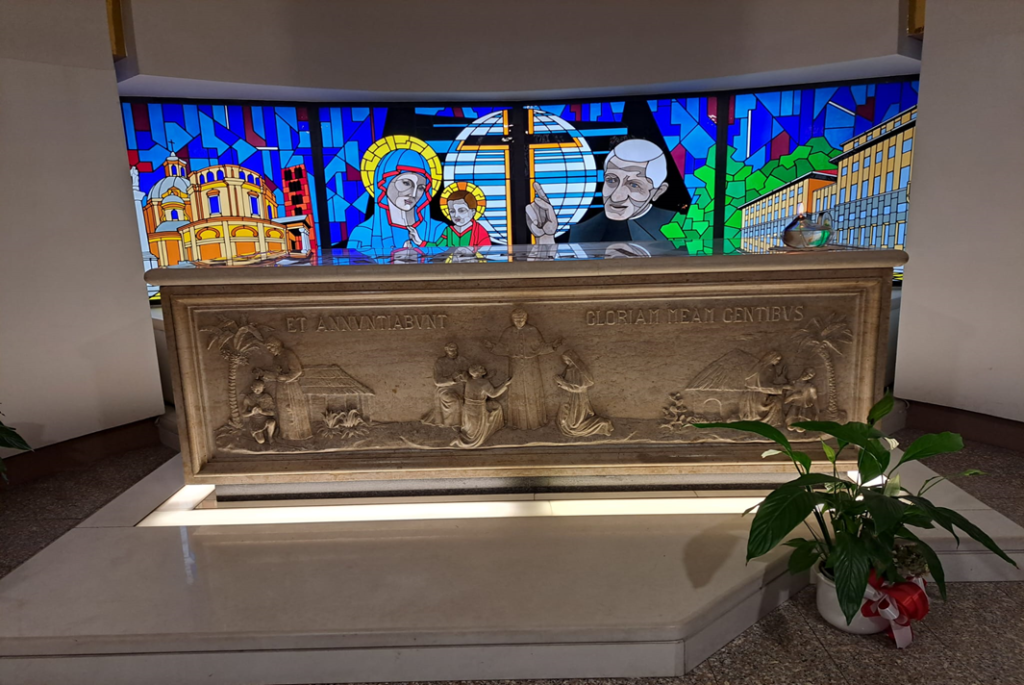
Although he is rightly acknowledged as the founder of the Consolata Missionary Fathers and Brothers and the Consolata Missionary Sisters, Saint Joseph Allamano consistently attributed the true inspiration of both congregations to Our Lady Consolata. As Rector of the Consolata Shrine in Turin, he experienced a profound Marian devotion that shaped his missionary outlook. He regarded Mary under the title “Consolata” as the real Foundress of the congregations, believing that she inspired and guided their establishment. Thus, founder and Foundress are inseparably linked in the spiritual identity of the Consolata Missionaries.
The miracle that paved the way for his canonization occurred in the Amazon rainforest of Brazil, where Consolata missionaries have served since 1948. On February 7, 1996, Sorino Yanomami, an indigenous man, was attacked by a jaguar in Catrimani, suffering catastrophic injuries, including a fractured skull and partial exposure of the brain.
After a grueling nine-hour journey, he was admitted to a hospital in Boa Vista and rushed into surgery. Medical personnel considered his survival highly improbable. During this critical period, Consolata missionaries gathered with his family and prayed a novena seeking Saint Joseph Allamano’s intercession. Against medical expectations, Sorino regained consciousness after ten days without neurological damage. Following rehabilitation, he returned to his village on May 8, fully healed. Doctors involved in his treatment described the recovery as medically inexplicable. After thorough examination by medical experts and theologians, the Vatican’s Congregation for the Causes of Saints recognized the event as a miracle, clearing the path for canonization.
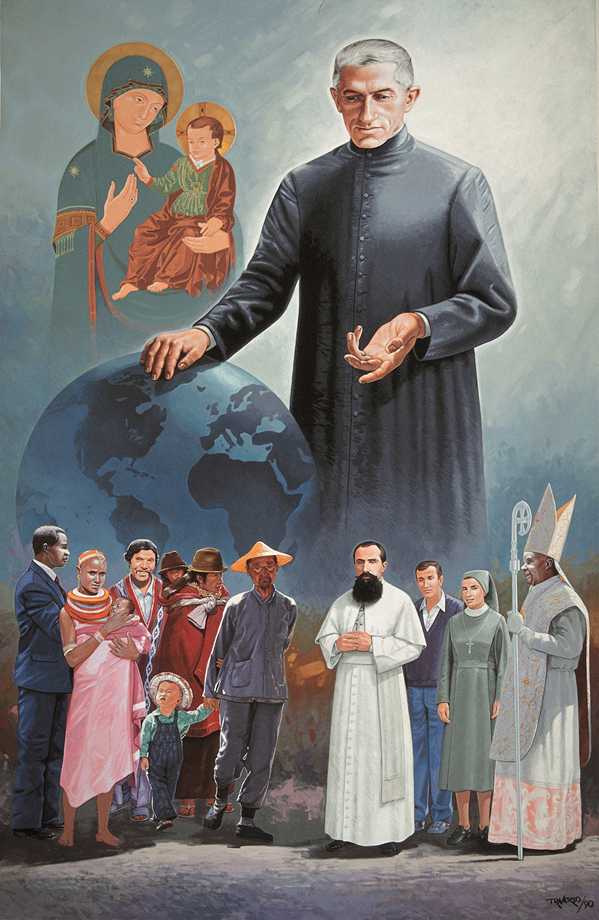
The missionary dream that animated Saint Joseph Allamano was rooted in Christ’s mandate: “As the Father has sent me, so I send you.” Though he never left Italy, he became a catalyst for global evangelization.
The first four missionaries, two priests and two brothers, departed for Kenya in 1902, marking the beginning of a vast missionary expansion. By the time of his death in 1926, his missionaries were already present in Kenya, Ethiopia, Tanzania, and Mozambique. Today, the Consolata Missionaries serve in over 28 countries, with vocations emerging from 25 nations, a living testament to the universality of his charism.
Saint Joseph Allamano understood that the proclamation of the Gospel must be accompanied by tangible concern for human dignity. He maintained that people are drawn to a faith that not only promises eternal life but also contributes to the improvement of life on earth. Evangelization and human development, therefore, were inseparable in his vision.
The Church and the world give thanks for the gift of Saint Joseph Allamano, priest, founder, spiritual master, and apostle of holiness. His life remains a compelling reminder that authentic mission begins in the sanctification of the missionary and blossoms into service that transforms both hearts and societies.
