
By Paschal Norbert
In the vast, unforgiving expanse of the Chalbi Desert, where volcanic sand and lava rock stretch endlessly under a merciless sun, the story of faith has been written patiently, humbly, and often quietly. It is a story of endurance and hope, of planting the Gospel in hard soil and trusting God for growth. For fifty years, German fidei donum priests have walked this land with the people of northern Kenya, particularly in today’s Catholic Diocese of Marsabit. One of them, Fr. Anthony Mahl, has lived this story for three decades, and through his eyes the journey of mission unfolds with clarity, gratitude, and deep faith.
“I am Fr. Anthony Mahl,” he begins simply. “I am originally from Germany, from the southern part of the country, specifically from the Diocese of Augsburg, which is about 50 kilometres north of Munich. I was ordained a priest in 1994,” he tells CISA in an interview.

Those few lines mark the beginning of a vocation that would eventually be shaped not in Europe, but in the desert of northern Kenya, among pastoralist communities whose resilience would profoundly mark his priesthood. Before theology and ordination, Fr. Mahl’s life followed a very different path.
“My first profession was that of a car mechanic,” he recalls, explaining “I worked for some years in that field, and later I joined an institution for late secondary education.”
His journey through philosophy and theology at the University of Augsburg eventually led to ordination and parish work near Augsburg. Yet even then, another horizon was slowly opening, one he neither planned nor imagined.
“During those two years, it slowly became clear that I might be sent for missionary work in Kenya, particularly in the northern part of the country, an area I had never visited before,” he says candidly.
At the time, two veteran missionaries from Augsburg, Fr. Richard and Fr. Francis, had served for about twenty years in North Horr and were preparing to return home. The question was whether the young and fragile local Church could yet stand on its own.
“Bishop Ravasi, the late emeritus bishop of Marsabit, felt strongly that the diocese did not yet have enough priests. Christianity was still young in the area, and the Christian communities were still developing. He therefore felt it would be good to receive at least two more missionaries from Germany,” Fr. Mahl explains.
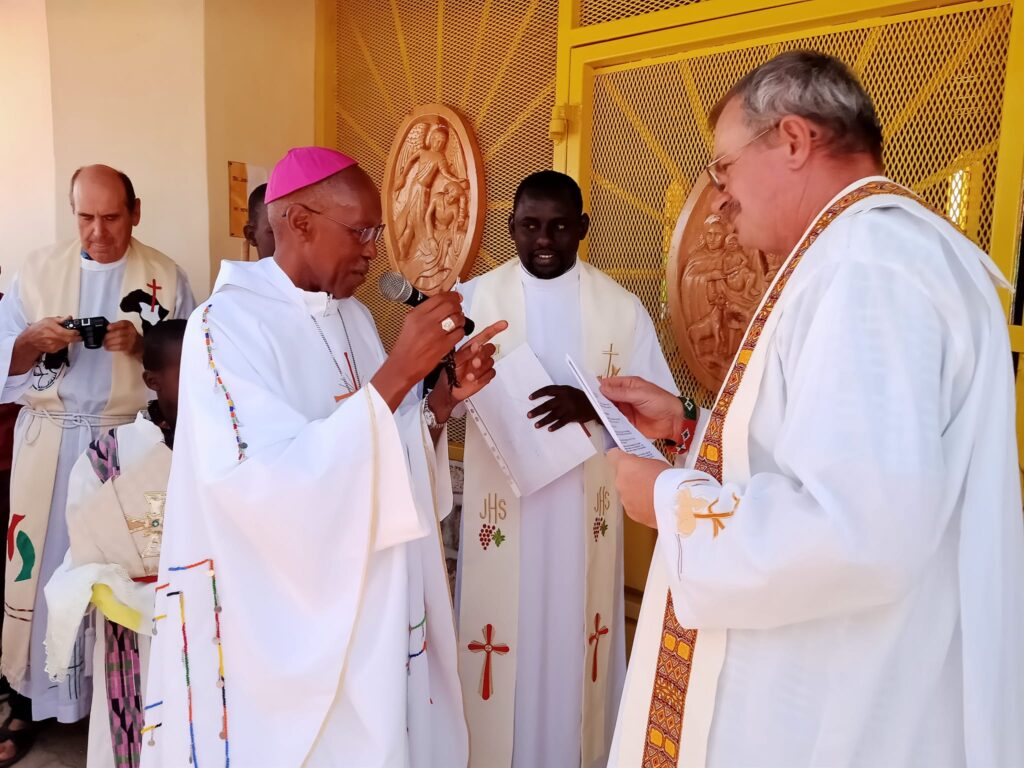
He notes, “For the Diocese of Augsburg, this was no small sacrifice. There was, and still is, a serious shortage of priests in Germany. However, our bishop emphasized that despite the local shortage, the Church could not forget the needs of the wider world.”
That conviction sent Fr. Hubert Moessmer to Kenya in 1995, and Fr. Mahl followed a year later. What awaited them was one of the largest parishes imaginable.
“At that time, the parish covered an enormous area, stretching from Marsabit to Illeret near Lake Turkana, up to the Ethiopian border, including Dukana, the slopes of the Hurri Hills, Kalacha, and many other places,” Fr. Mahl recalls. Travel defined mission. “In the beginning, we travelled constantly. Every four to six weeks, we would go to Illeret, which is about 200 kilometres from North Horr, and stay there for a week.”
North Horr became the mother mission, once the only Catholic presence in a region now dotted with parishes. Dukana, Kalacha, Maikona, and Illeret were all outstations served from this single centre.
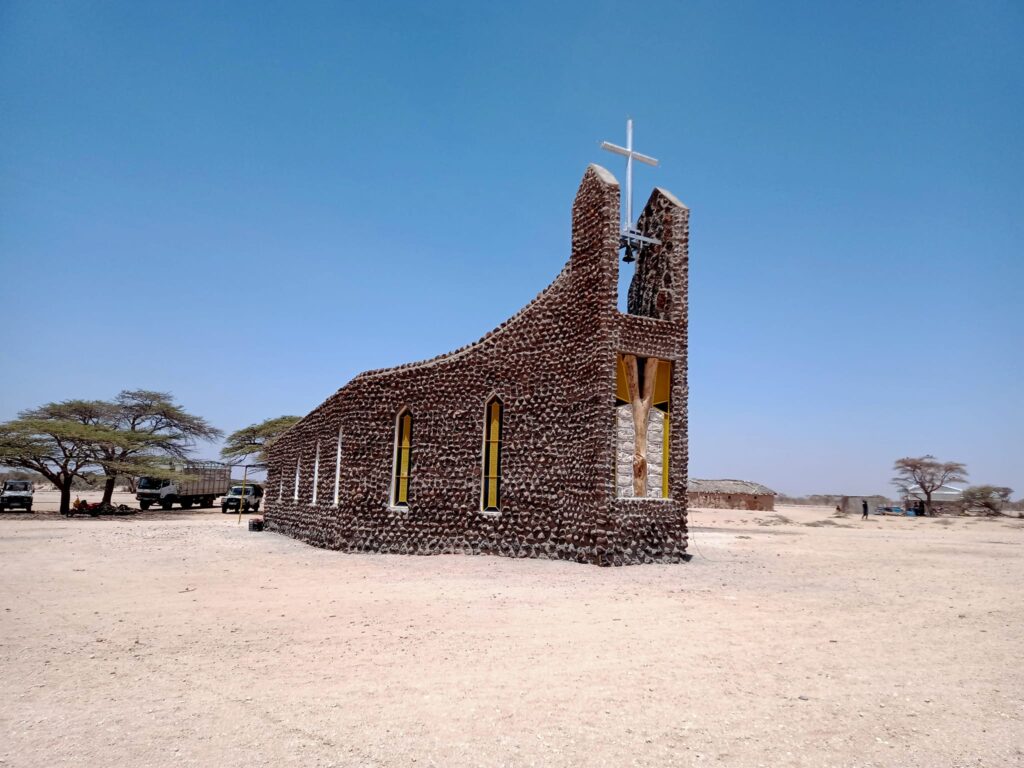
“At one point, we could honestly say that everything beyond Marsabit, up to the Ethiopian border and Lake Turkana, belonged to our parish,” he says.
The sheer scale eventually made division inevitable. “It became very clear to us that the area was simply too large. We needed more priests, and the parish had to be divided.”
The first breakthrough came in 2005, when Benedictine missionaries established a parish in Illeret.
“We were deeply grateful for this,” Fr. Mahl says, “as it relieved us of a significant burden and allowed the Benedictines to be closer to the people.” Further growth followed: Dukana became a parish in 2014, and Kalacha in 2017, after careful preparation.
“After 21 years in North Horr, I moved to Kalacha as parish priest,” he recounts. What once were mud-and-palm-leaf churches slowly gave way to permanent structures, mirroring the steady growth of Christian communities.
Yet mission here has never been romantic. The Chalbi Desert tests both body and spirit.
“The climate is getting noticeably hotter,” Fr. Mahl observes. “Afternoons can be unbearably hot.” Infrastructure remains fragile. “In Kalacha there is still no electricity. Power lines were installed over ten years ago, but electricity has never been connected. We rely entirely on solar power and generators.”
Poverty is a daily reality. “One salary often supports up to 20 people,” he explains, speaking of extended families dependent on a single income.
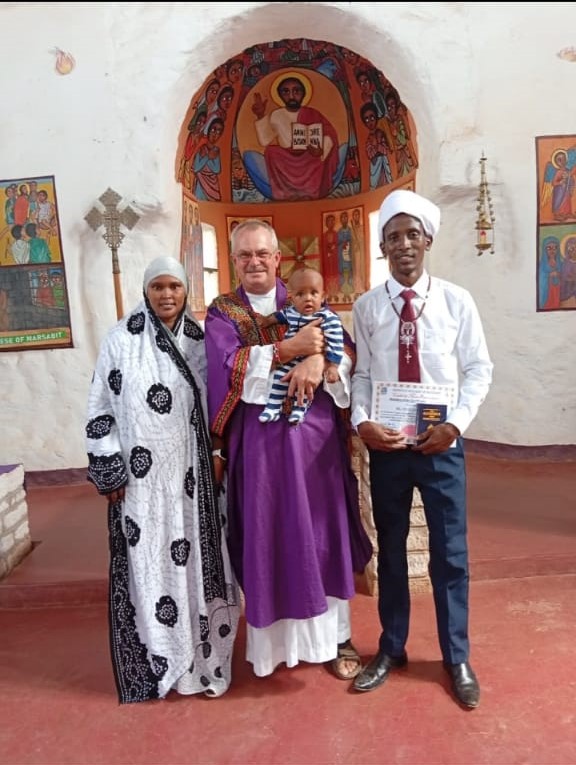
Droughts repeatedly erase fragile gains. “After the severe droughts of 2022 and 2023, rains came and livestock slowly began to recover. However, the most recent rainy season failed.”
The result is an unending stream of human need. “From morning until evening, people knock on our doors asking for help,” he says with honesty. “Sometimes it is simply too much.”
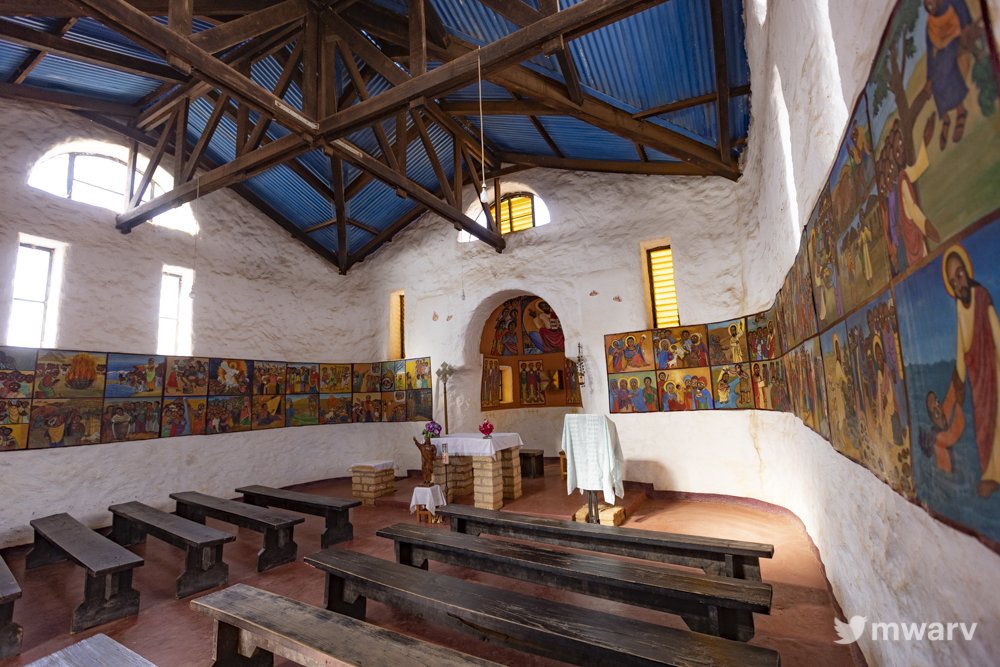
And yet, joy persists. “Personally, I feel fulfilled by the work,” Fr. Mahl reflects. “What kept me going was always the sense that important things needed to be done.”
Education has been one of the most hopeful fruits of the mission, schools established where none existed, young people supported through secondary school, college, and university. Faith, too, has taken root, even if slowly.
“People enjoy celebrations, Mass, feast days, singing, and dancing,” he notes, while acknowledging the ongoing need for deeper catechesis.
Cultural realities shape the Gospel’s reception. “Cultural traditions are extremely important to the pastoralist communities,” he explains. “Culture often takes precedence over Church events.”
Marriage, confession, and moral teaching remain challenging, and competition from Islam is real. Still, Fr. Mahl remains hopeful.
“There remains a strong Christian presence,” he affirms. “The work continues.”
Underlying everything is gratitude, toward God, toward the people, and toward the Church that sent and sustained him.
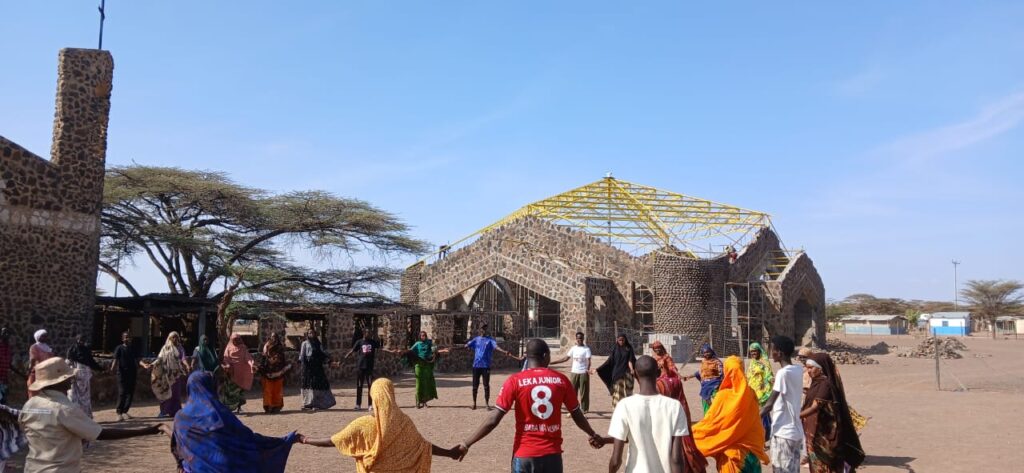
“During my time in Kenya, the Diocese of Augsburg has had four bishops,” he says. “All of them have been supportive of our mission.” Financial, personal, and pastoral support from Germany made fifty years of fidei donum presence possible, even as responsibility is gradually handed over to the local clergy of Marsabit.
Looking back, Fr. Mahl marvels at the path his life has taken: “I never envisioned that my priesthood would be so deeply missionary or that I would spend most of my vocation in Africa.”
“But God has His own way of calling people.” In the heat of Chalbi, amid poverty and perseverance, that call has borne fruit, quietly, faithfully, and joyfully.
After fifty years, the German missionary presence in the Chalbi Desert stands not as a monument to foreign effort, but as a testimony to shared faith. In North Horr, Dukana, Kalacha, Maikona, and Illeret, the Church lives on, shaped by desert winds, sustained by hope, and carried forward by a people who now call this faith their own.
