By Francis Ngahu
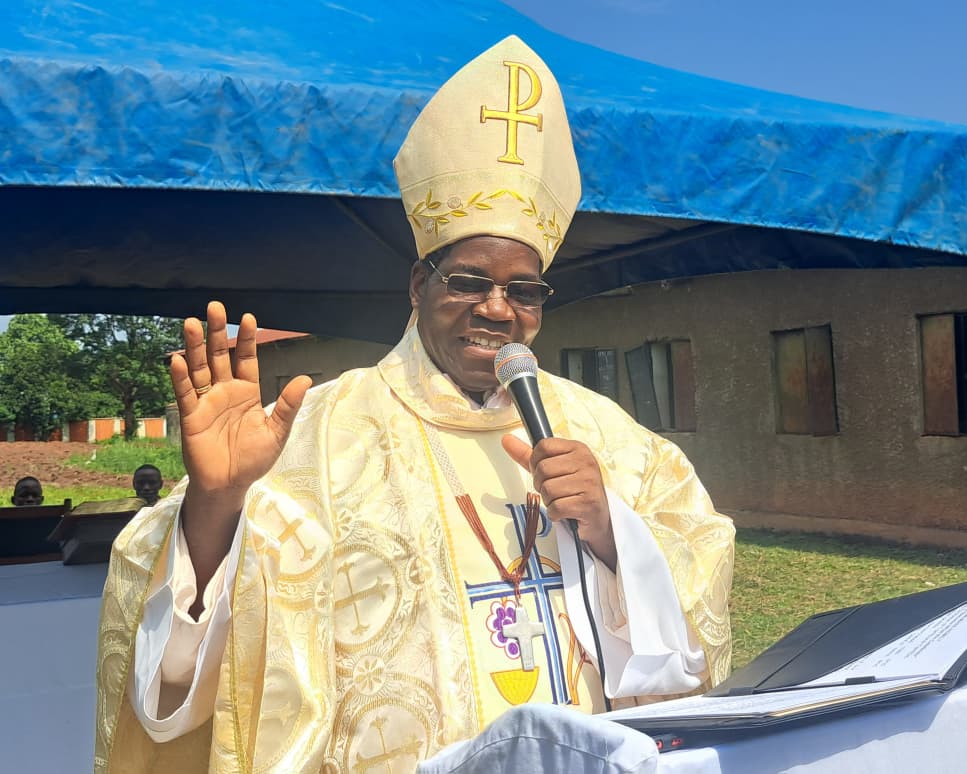
YAMBIO, AUGUST 13, 2026 (CISA) – Bishop Edward Hiiboro Kussala of the Catholic Diocese of Tombura-Yambio has called on South Sudan’s communities to embrace cultural dance as a means of fostering peace, reconciliation and national cohesion, as the country continues to grapple with conflict.
In a statement issued on Tuesday, August 11, Bishop Hiiboro described South Sudan’s cultural traditions as expressions of identity and dignity capable of helping communities move beyond division.
“South Sudan is a nation blessed with 64 tribes and many more communities, each with its own rich culture and traditions,” he said. “Our cultural dances are more than entertainment; they are a celebration of our identity, heritage, unity, and dignity.”
The bishop encouraged communities to recognise cultural dance as “a powerful instrument for unity, peace, reconciliation, youth empowerment, and nation-building.”
He pointed to its role in shaping younger generations, saying, “When we dance together, we teach our young people to appreciate who they are, respect one another, and value the beauty of our diversity.”
Bishop Hiiboro, who has led the Diocese of Tombura-Yambio since his episcopal consecration in June 2008, also called on South Sudanese to safeguard their traditions and allow the country’s cultural diversity to strengthen ties among its communities.
“Let us preserve our cultures, learn from one another, and celebrate our diversity, not as a reason to divide us, but as a gift that makes South Sudan stronger and more beautiful,” he said.
A Nation Still at War
South Sudan gained independence from Sudan in 2011. Two years later, a political dispute between President Salva Kiir Mayardit and his then deputy, Riek Machar, escalated into civil war after Kiir accused Machar of plotting a coup, an allegation Machar denied. The violence that followed spread along ethnic lines.
A September 2018 study by the London School of Hygiene & Tropical Medicine estimated that the war caused about 382,900 excess deaths between December 2013 and April 2018, roughly half of them a direct result of violence and the remainder attributed to disease and malnutrition linked to the conflict. By early 2018, fighting had displaced some two million people inside South Sudan and driven a further 2.5 million into neighbouring countries as refugees.
That same month, the Revitalised Agreement on the Resolution of the Conflict in South Sudan (R-ARCSS) was signed in Addis Ababa, Ethiopia, establishing a power-sharing framework intended to end the war. Key provisions, including the unification of the armed forces, the adoption of a permanent constitution and the holding of elections, remain unimplemented.
According to the Council on Foreign Relations, the 2025 arrest of Machar and other opposition figures effectively dismantled the unity government, and renewed fighting in Upper Nile and Jonglei has since displaced hundreds of thousands more people and constrained humanitarian operations. The Council reported that by 2026, roughly 10 million South Sudanese needed humanitarian assistance, more than two million remained internally displaced, and parts of Upper Nile and Jonglei faced catastrophic levels of food insecurity.
Church’s Continued Call for Peace
Throughout the country’s cycles of conflict, the Catholic Church has continued to appeal for dialogue, reconciliation and peace while standing alongside affected communities through pastoral care and humanitarian assistance.
In November 2025, Catholic bishops from Sudan and South Sudan pledged to keep advocating for “dialogue, reconciliation, healing, unity and peace” among political leaders and at the grassroots level.
The Church has also continued to provide humanitarian assistance through its dioceses and charitable agencies. Catholic bishops have said, “Let our churches become sanctuaries of hope, where all may find healing, unity, and renewed strength.”
Story adapted from a report by ACI Africa.
