By Francis Ngahu
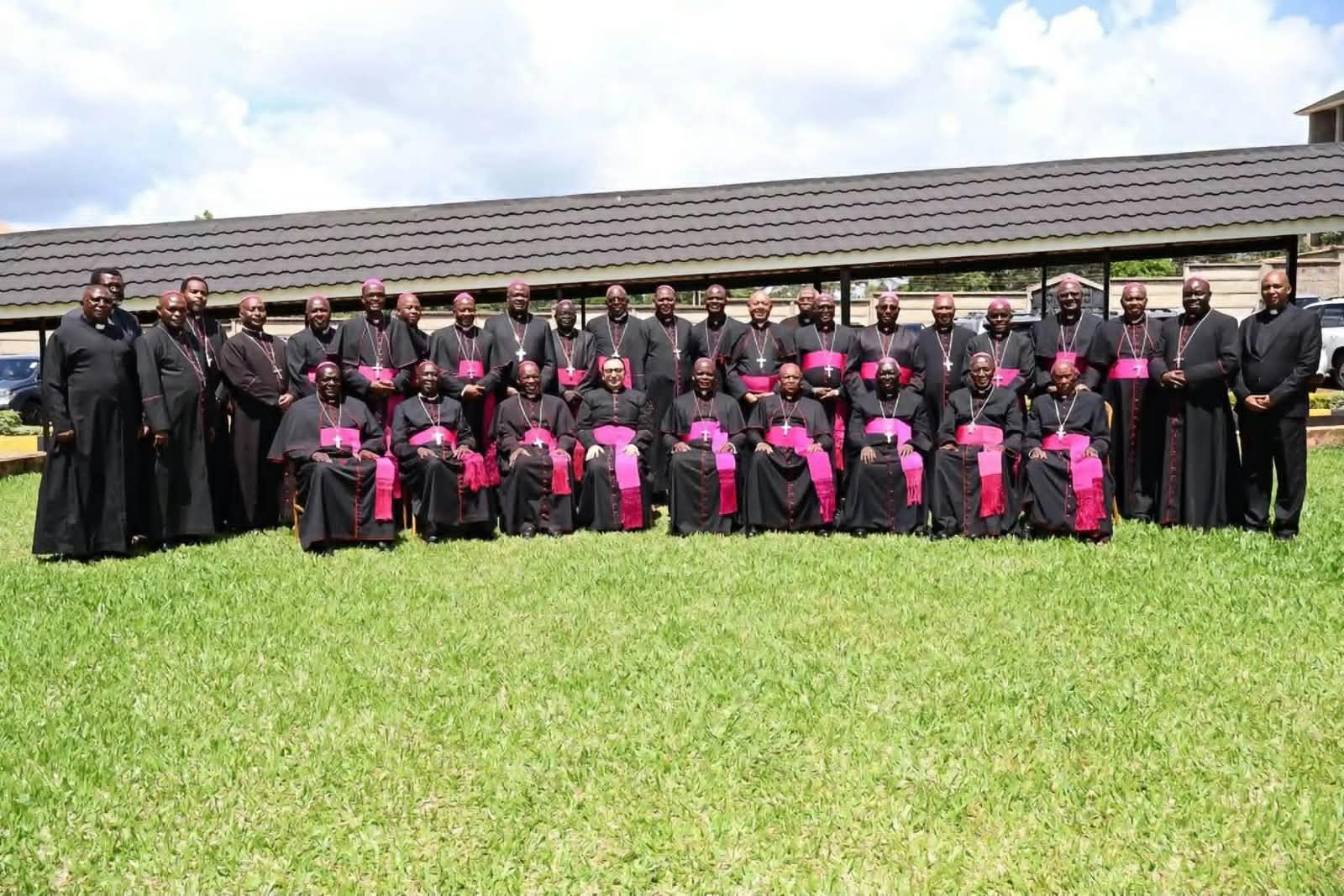
EMBU, Kenya. The Kenya Conference of Catholic Bishops (KCCB) has directed that no political address be given in any Catholic church in the country, and has urged Parliament to reject Bills it says could cast doubt on the credibility of next year’s General Election.
The Bishops made the call in a State of the Nation address, “A Call for a Just, Peaceful and United Kenya,” delivered at the John Cardinal Njue Pastoral Centre in Embu, where the printed statement was handed to the press. It is signed by KCCB Chairman Most Rev. Maurice Muhatia Makumba. They also called on the Independent Electoral and Boundaries Commission (IEBC) to remain independent, condemned abductions, enforced disappearances and harassment of rights defenders, and appealed to young people to obtain national identification cards, register as voters and reject inducements to violence.
The statement is addressed to Kenyans and to “our international partners.” It presents the Church’s intervention as a pastoral duty rather than partisan engagement, citing Pope Leo XIV’s Magnifica Humanitas on the Church’s duty to make her voice heard when “politics fails to address the tragedies of humanity,” “not in order to dominate, but to promote communion.” It also draws on the AMECEA Plenary Assembly’s reflection on the place of young people in the Church and in society, linking the Kenyan Bishops’ message to the wider Eastern African Church.
A directive for priests
The Bishops said that “politicians have many options to utilize in their search for votes, including the media, barazas, and roadside rallies.” They were “reiterating and directing that there shall not be any political address given in any of our Catholic Churches, in any part of the country.”
They instructed all priests to implement the position “with diligence and the seriousness it deserves.” They said priests, as pastoral agents, have “a pastoral obligation to protect sacred places from being used for political campaigns.”
The statement said places of worship should remain “peacefully and prayerfully available to everyone, regardless of their political affiliation,” and that people from opposing parties come to them “not as parties but as worshippers.” The Bishops said there have been incidents in which politicians attempted to use places of worship as campaign platforms.
Warning on Bills and access to information
The Bishops said Bills before Parliament must be “genuinely motivated for the common good.” They said Bills that strengthen the Electoral Act should be fast-tracked, but cited proposals such as the banning of livestreaming of the presidential vote tally as raising “unnecessary tensions.”
“At this late hour, we should not introduce Bills that cast doubt on the credibility of the process into the general elections,” the statement said. It warned that doing so risks “discrediting the very process that is meant to deliver elected leaders.”
They asked the Speakers of Parliament to ensure that no divisive Bills are brought to the House. They said Parliament has “yet one more chance to redeem itself, by totally rejecting such an attempt to muzzle free access to information,” adding that Kenyans should have access to all information in the elections.
IEBC and the Judiciary
The Bishops said the IEBC’s “primary mandate is to deliver free, fair and credible elections.” They asked it to put clear mechanisms in place for voter registration, logistics, training, conduct of election officials, verification of results, management of party agents, rapid resolution of complaints and public communication at every stage.
The IEBC, they said, should “resist every attempt by politicians or other powerful interests to intimidate, manipulate, or compromise its work.” The statement said Kenya needs an election “whose legitimacy is secured not only by the final declaration but also by the confidence the voters have in the electoral process.”
The Bishops recalled that past electoral disputes led to “the loss of lives and destruction of property” and said these mistakes “should not be repeated.” They also called on the Judiciary to dispense justice, including on electoral matters, “with diligence and impartiality.”
Abductions, speech and the security organs
The Bishops said they were concerned that freedom of speech “is being tested on all fronts.” They noted that “incidents of abductions, enforced disappearances, and harassment continue.”
“What is of more concern is that some of these incidents are carried out by armed people in collaboration with the police,” the statement said. It added that in other cases “the police watch as goons harass legitimate actors exercising their right to freedom of expression.”
The Bishops condemned violations of freedom of expression and association. They also called for responsibility in the use of those freedoms, particularly in avoiding “inciteful, spiteful, tribal, hateful or demeaning statements.” They asked the security organs to be non-partisan in applying the law, “without favouring any candidates or political affiliations.”
Young people and campaign conduct
Addressing young people, the Bishops said they “encourage and support your energy, creativity, and interest in participating in civic duty.” They asked them first to obtain an ID and then to register to vote “so that you can elect the leaders of your choice.”
They warned that “some politicians will lure you with enticements to be involved in political malpractices and cause violence,” and urged youth to “resist the lure of money to cause violence.”
The Bishops repeated their rejection of “the culture of goons and all forms of political violence and threats to life.” They warned that “the relative peace we enjoy can be lost through careless words.” They noted that the stipulated campaign period has not begun, and invited all aspirants, especially presidential candidates, “to make a public commitment to keep peace and maintain political decency.”
Education Bills
On education, the Bishops acknowledged the Government’s responsibility to reform the sector and the work of the Presidential Working Party on Education Reform. They said, however, that the six Education Bills before the National Assembly “contain provisions that depart from the consultative process and would weaken the institutions that have long served the country.” They said they have made submissions to this effect.
A call to a different path
The statement opened with Micah 6:8 and closed with a call to place “the dignity of every human person, peace, justice, truth, and the common good above ethnic, political, or personal interests.”
The Bishops said Kenya “has painfully learnt lessons from violence, division, corruption, and exclusion,” and urged a different path: “dialogue rather than confrontation, service rather than self-interest, accountability rather than impunity, and solidarity rather than division.”
They also appealed to Kenyans to observe discipline and road safety during the festive season, citing “the road carnage we have recently experienced.
