By Paschal Norbert
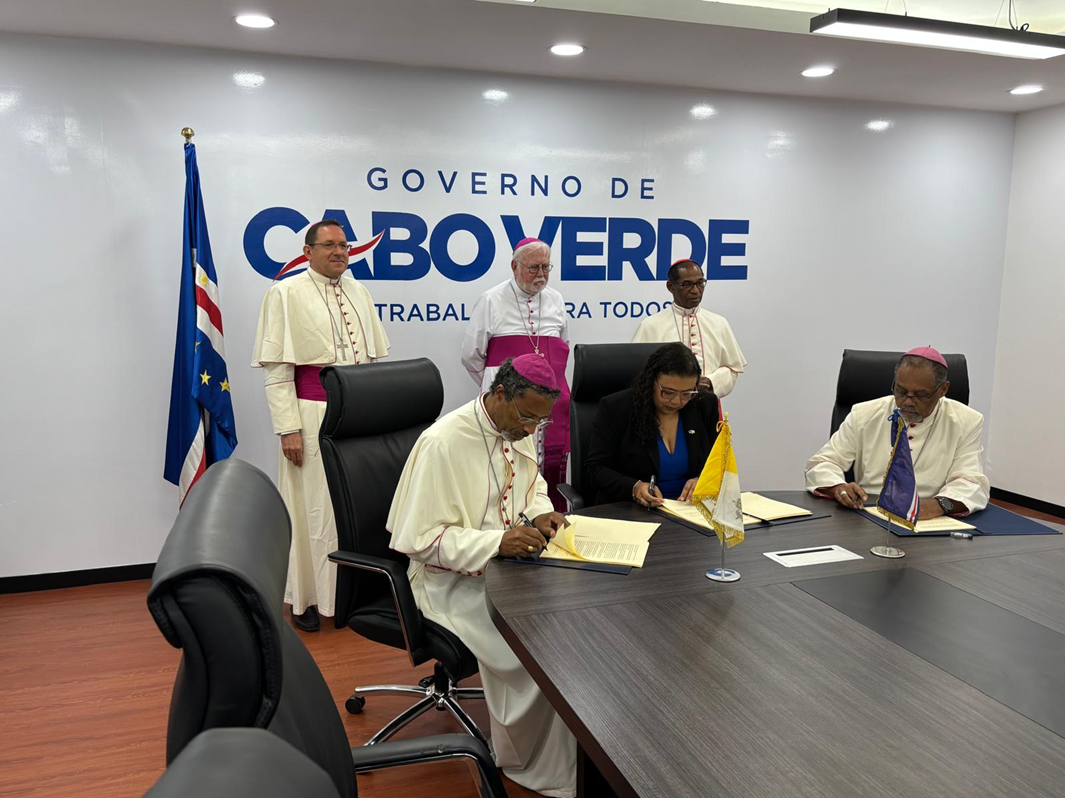
PRAIA, MAY 13, 2026 (CISA) — The Holy See and the Republic of Cape Verde on May 11, signed the Protocol for the Implementation of the 2013 Bilateral Agreement governing the legal status and activities of the Catholic Church in the country.
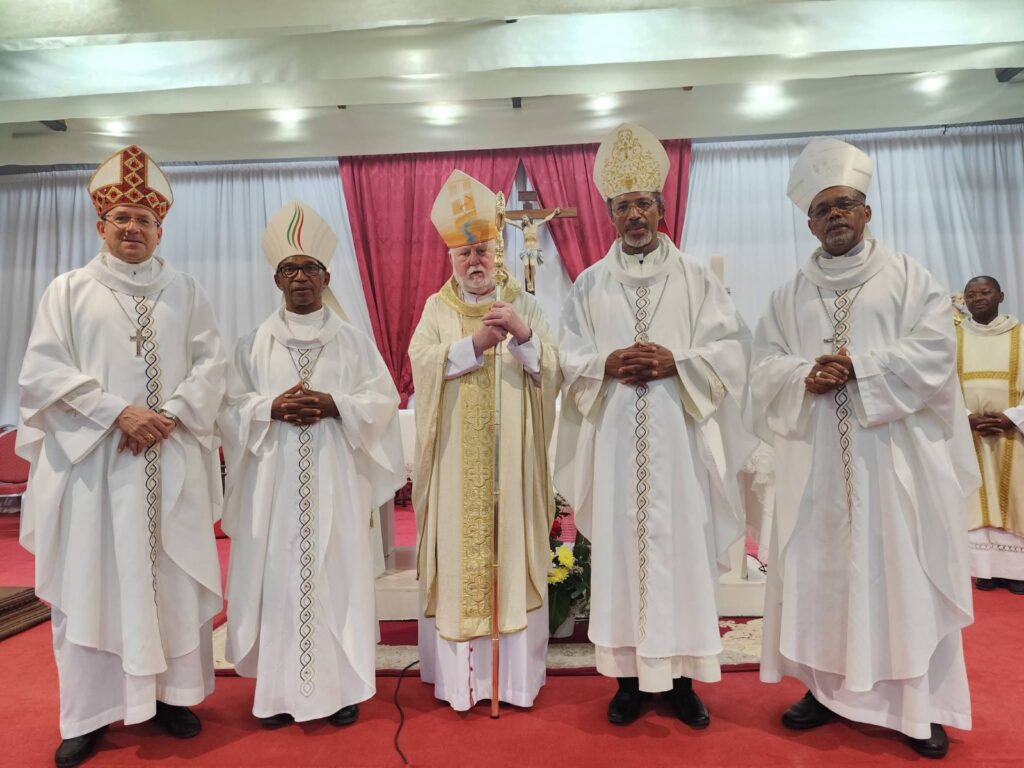
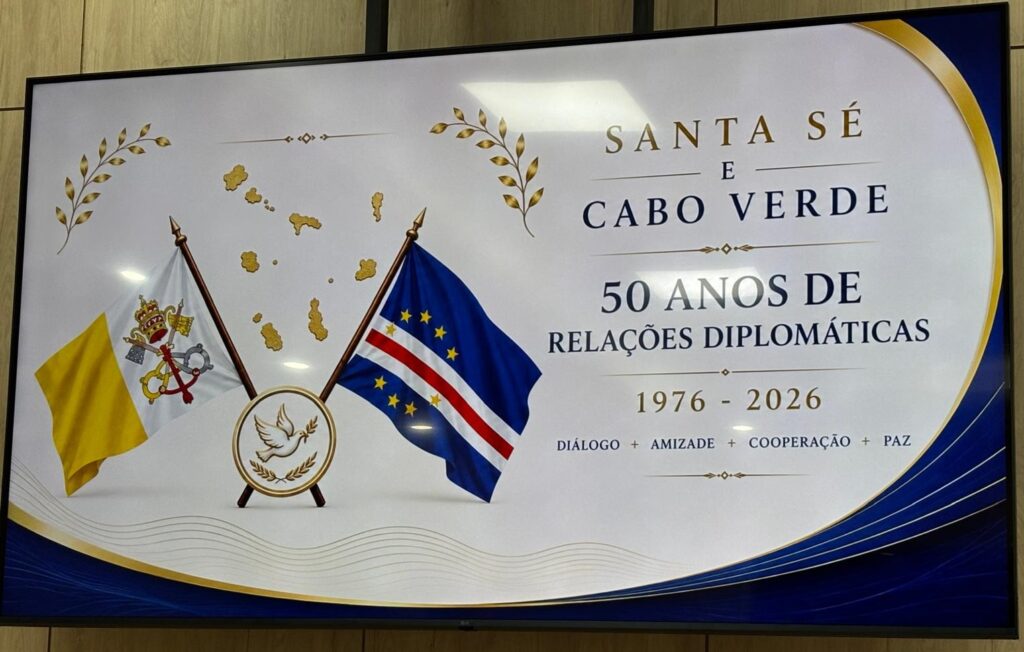
The signing took place in Praia during the official visit of Archbishop Paul Richard Gallagher, the Vatican’s Secretary for Relations with States and International Organizations, who is in Cape Verde until May 14 for celebrations marking the 50th anniversary of diplomatic relations between the Holy See and Cape Verde.
The protocol was signed in the presence of Archbishop Gallagher after his meeting with Ms. Janine Tatiana Santos Lélis, Minister of State. Representatives of the local Catholic Church signed the document, formally activating provisions contained in the bilateral agreement signed between the Holy See and Cape Verde in 2013.
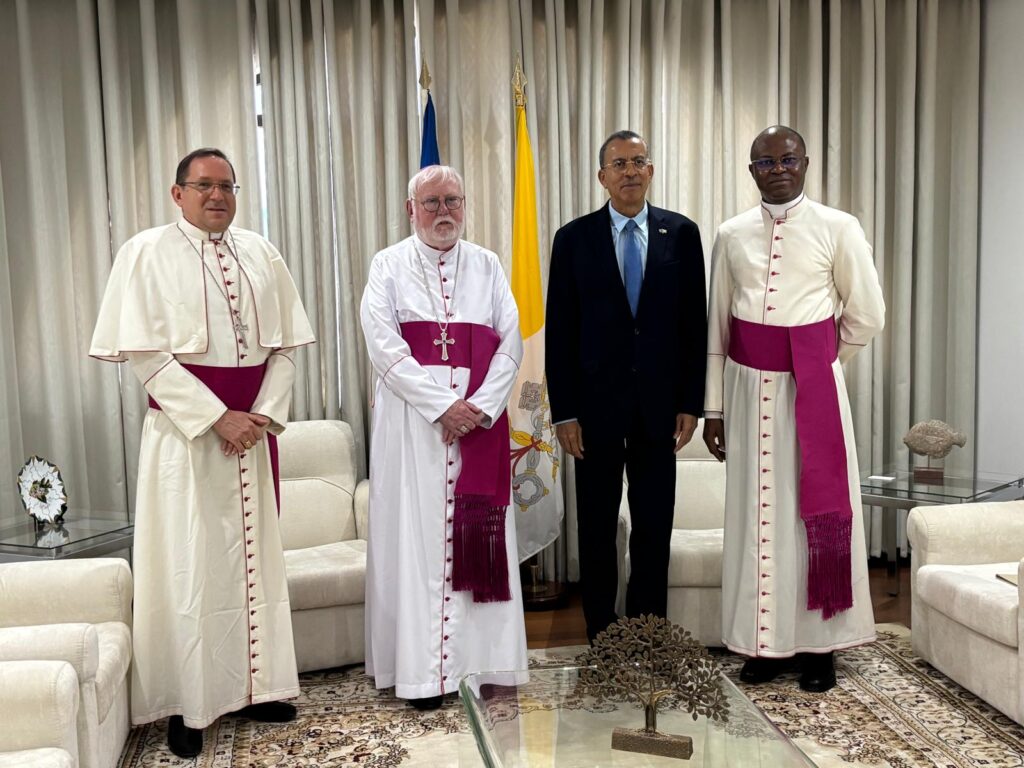
Archbishop Gallagher later held talks with Mr. José Luís Livramento, Minister of Foreign Affairs, Cooperation and Regional Integration, and Communities, as part of his official engagements in the island nation.
The protocol signed in Praia implements the Agreement between the Holy See and Cape Verde, signed on June 10, 2013, in Praia. The agreement, consisting of 30 articles, established the juridical framework regulating relations between the Catholic Church and the Cape Verdean state.
The accord was later ratified at the Vatican following a meeting between Cape Verde’s then Prime Minister José Maria Pereira Neves and senior Holy See officials.
During the ratification process, Cardinal Pietro Parolin, Vatican Secretary of State, exchanged the instruments of ratification with Cape Verde’s prime minister.
The agreement recognizes the legal personality of Catholic institutions in Cape Verde and regulates areas including religious education in schools, recognition of Sundays as a day of rest, protection of places of worship, Church charitable activities, and pastoral assistance in prisons, hospitals, and the armed forces.
The protocol signed on May 11 establishes procedures for implementing those provisions.
Archbishop Gallagher Explains Holy See Diplomacy
Later on the same day in Praia, Archbishop Gallagher delivered a speech on the work of Holy See diplomacy during a ceremony marking 50 years of diplomatic relations between the two states.
Addressing government officials, diplomats, Church leaders, and civil society representatives, Archbishop Gallagher said the Holy See’s diplomatic activity is centred on peace and the protection of human dignity.
He said the Holy See’s diplomatic tradition dates back to the 11th century during the Gregorian Reform, when the Church institutionalized the right of papal legation.
He said permanent diplomatic missions emerged in the 15th century, later becoming a standard practice in international diplomacy, while the offices of nuncios, legates, and internuncios were consolidated between the 16th and 17th centuries.
Archbishop Gallagher said the Holy See currently maintains diplomatic relations with 184 states, as well as the European Union and the Sovereign Military Order of Malta. He said 93 diplomatic missions are accredited to the Holy See in Rome.
Archbishop Gallagher also outlined the priorities of papal diplomacy, including the defense of life, the family, religious freedom, human rights, democracy, multilateral cooperation, and respect for international law.
He identified armed conflicts, climate change, migration, economic inequality, drug trafficking, technological change, and what he described as a crisis of values as key global challenges facing the international community.
Historical Relations with Cape Verde
Archbishop Gallagher said relations between the Holy See and Cape Verde predate the country’s independence in 1975. He recalled that on July 1, 1970, Pope Paul VI received African independence leaders at the Vatican, including Amílcar Lopes Cabral. He said the meeting demonstrated the Holy See’s support for African self-determination.
Archbishop Gallagher also cited the establishment in 1533 of the Diocese of Santiago de Cabo Verde, describing it as the first Catholic diocese in sub-Saharan Africa.
He referred to the 2013 agreement as an instrument that guarantees the Catholic Church freedom to carry out its pastoral, educational, and charitable mission in Cape Verde.
Archbishop Gallagher’s visit to Cape Verde concludes on May 14.