By Paschal Norbert
WASHINGTON, FEBRUARY 4, 2026 (CISA) – Catholic bishops from the United States and Africa have issued a strong joint appeal for renewed international solidarity, urging governments, the Church, and the faithful to uphold humanitarian assistance, peacebuilding, and integral human development amid growing global challenges and declining foreign aid.
In a joint statement titled “Brothers and Sisters in Hope: International Assistance and Mutual Solidarity between the Bishops and Faithful of the United States and Africa,” the prelates reaffirmed the moral and human value of cooperation between nations and peoples, especially in the face of cuts to U.S. international assistance programs that have long supported humanitarian and development efforts across Africa.
The statement was released on February 2, 2026, the Feast of the Presentation of the Lord, and was jointly signed by Bishop A. Elias Zaidan, Chairman of the Committee on International Justice and Peace of the United States Conference of Catholic Bishops (USCCB), and Bishop Stephen Dami Mamza of Yola Diocese, Nigeria, 1st Vice President and Chair of the Justice, Peace and Development Commission of the Symposium of Episcopal Conferences of Africa and Madagascar (SECAM).
The joint declaration comes against the backdrop of significant geopolitical and economic shifts, including reductions US international assistance and increasing pressures on vulnerable communities in Africa caused by conflict, climate change, economic inequality, and exploitation of natural resources.
Drawing inspiration from the 2025 Jubilee Year, the bishops situate their message within the wider call of the universal Church to rediscover hope in what Pope Francis has described as “the signs of the times.” They recall nearly 25 years of structured solidarity following the U.S. bishops’ landmark initiative A Call to Solidarity with Africa, launched in response to the Synod of Bishops for Africa, as well as more recent efforts to strengthen justice, peace, and development across the continent.
“As brother bishops, we address the Church in the United States and Africa with a call to renewed fraternity and mutual solidarity between our peoples,” the statement reads, emphasizing that integral human development, especially of the poorest and most neglected, remains central to the Church’s evangelizing mission.
At its core, the statement seeks to reaffirm the Church’s commitment to international humanitarian and development cooperation that saves lives, respects local cultures, and strengthens community capacity. It also aims to provide a moral framework for evaluating public policy, international trade, and diplomatic engagement between the United States and African nations.
The bishops underline several guiding objectives: protecting human dignity and life, promoting peace and security, strengthening families, empowering young people, advancing climate justice, and ensuring ethical engagement in Africa’s mineral-rich regions.
“In the context of a significant reduction in U.S. international assistance programs, we offer a vision of hope in Jesus Christ, source of our hope,” the bishops state, stressing that solidarity must be rooted not in paternalism or exploitation, but in genuine partnership.
The prelates highlight the unique role of the Catholic Church in delivering aid and building local capacity, noting that Catholic institutions are deeply embedded in local communities and well placed to reach those most in need while respecting human life and cultural values.
They also reaffirm the family as the fundamental unit of society, calling for international cooperation that supports families founded on marriage and rejects practices hostile to life. This, they say, is essential for authentic solidarity and sustainable development.
Turning to Africa’s youthful population, the bishops describe the continent as “abundant in hope,” pointing to its entrepreneurial energy and growing Catholic population as opportunities for deeper economic and social ties between Africa and the United States.
On climate justice, the statement echoes the African Church’s longstanding call for ecological conversion, warning that environmental degradation disproportionately harms the poorest communities and fuels instability, displacement, hunger, and violence. These realities, the bishops insist, are a “cry” to the global community to place care for creation at the center of public policy and daily life.
The statement also addresses the exploitation of critical minerals, warning that the scramble for resources has often trampled on the dignity of local populations, leading to conflict, child labour, and forced labour. The bishops call for trade relationships shaped by equity, respect for human rights, and the hopes of the poor.
In regions marked by long-running conflicts and rising extremism, the African bishops are praised for their prophetic witness as peacebuilders and “bold preachers of hope.” The US Church, the statement notes, can learn from this witness while also supporting peace through responsible investment, human-centered diplomacy, and the defense of religious freedom.
The bishops strongly reject what they describe as a one-sided vision of solidarity, instead emphasizing the contributions of the African Church and African diaspora to the life of the Church in the United States. They highlight the witness of African saints and martyrs, the insights of African theologians, and the pastoral service of African clergy and religious in American dioceses.
“The faithful of the U.S. and Africa are gifts to one another,” the statement affirms.
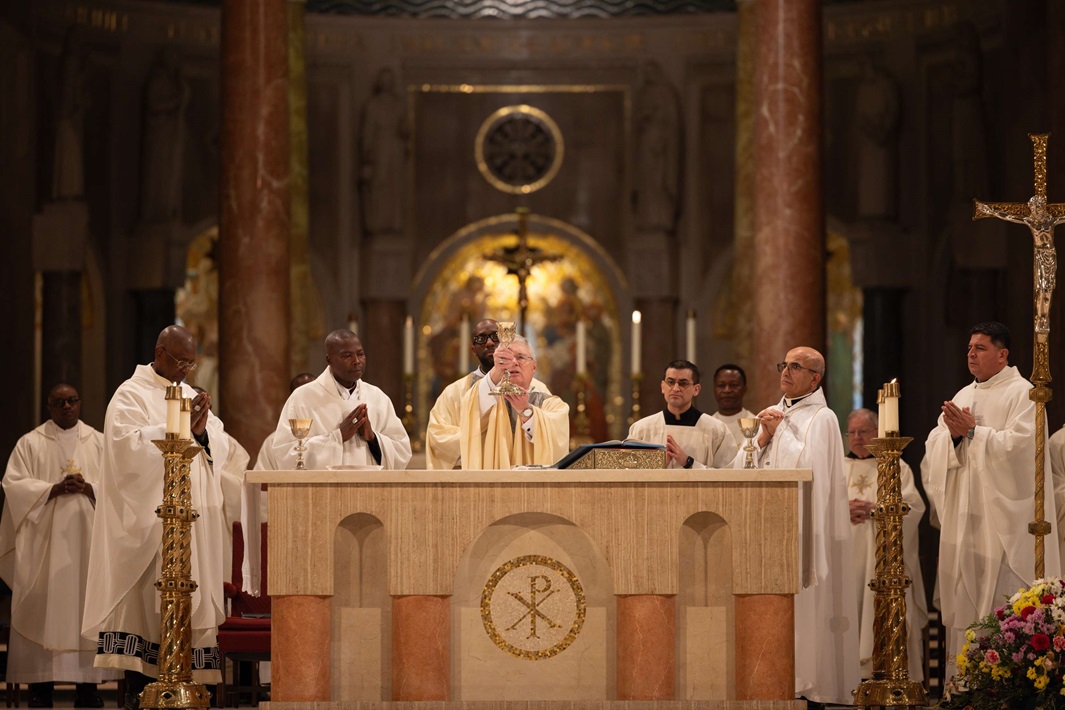
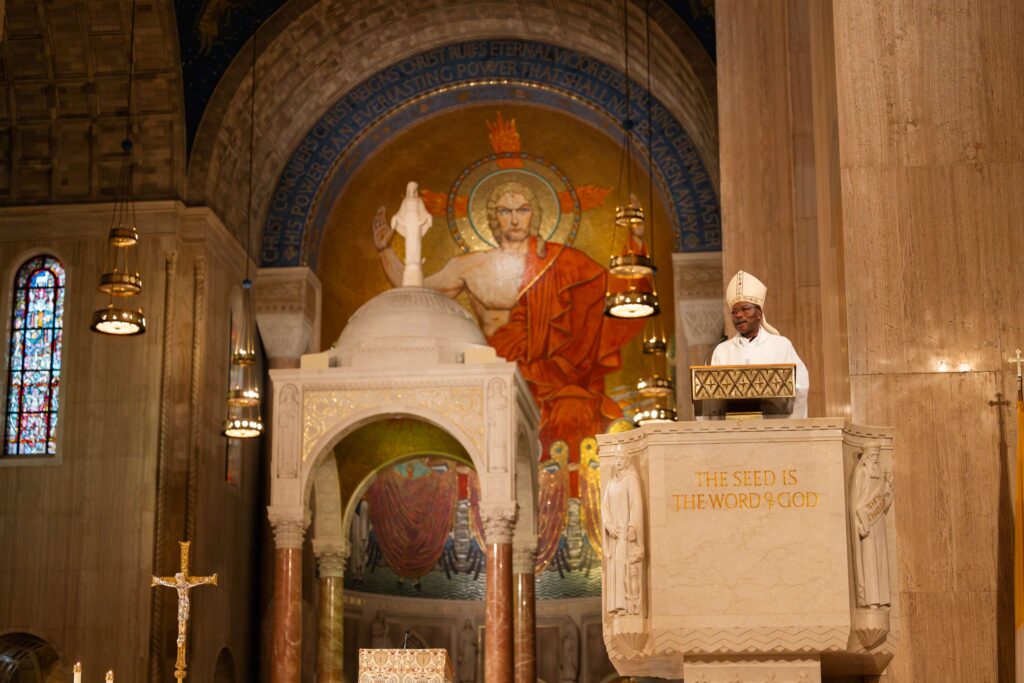
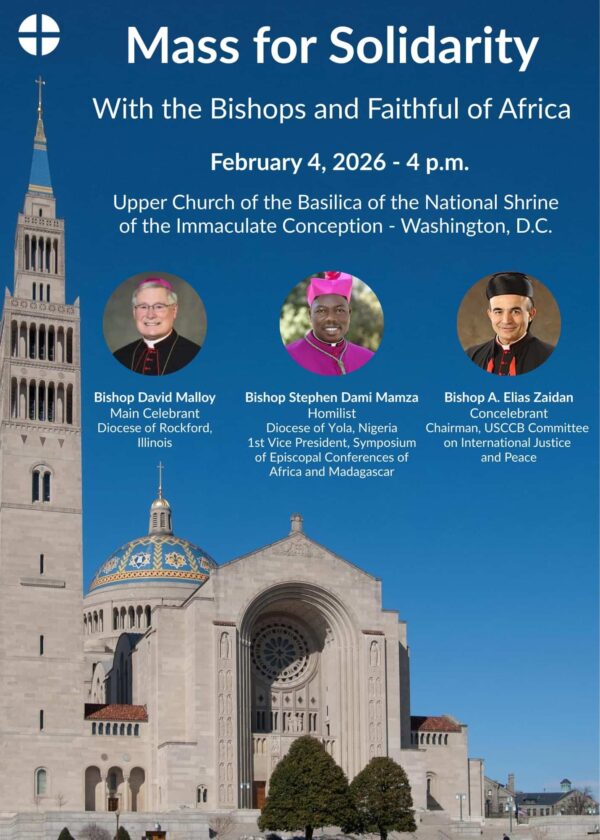
In conjunction with the release of the joint statement, the bishops announced that representatives of the two committees will gather for a Mass for Solidarity with the Bishops and Faithful of Africa on February 4, 2026, at the Basilica of the National Shrine of the Immaculate Conception in Washington, D.C.
