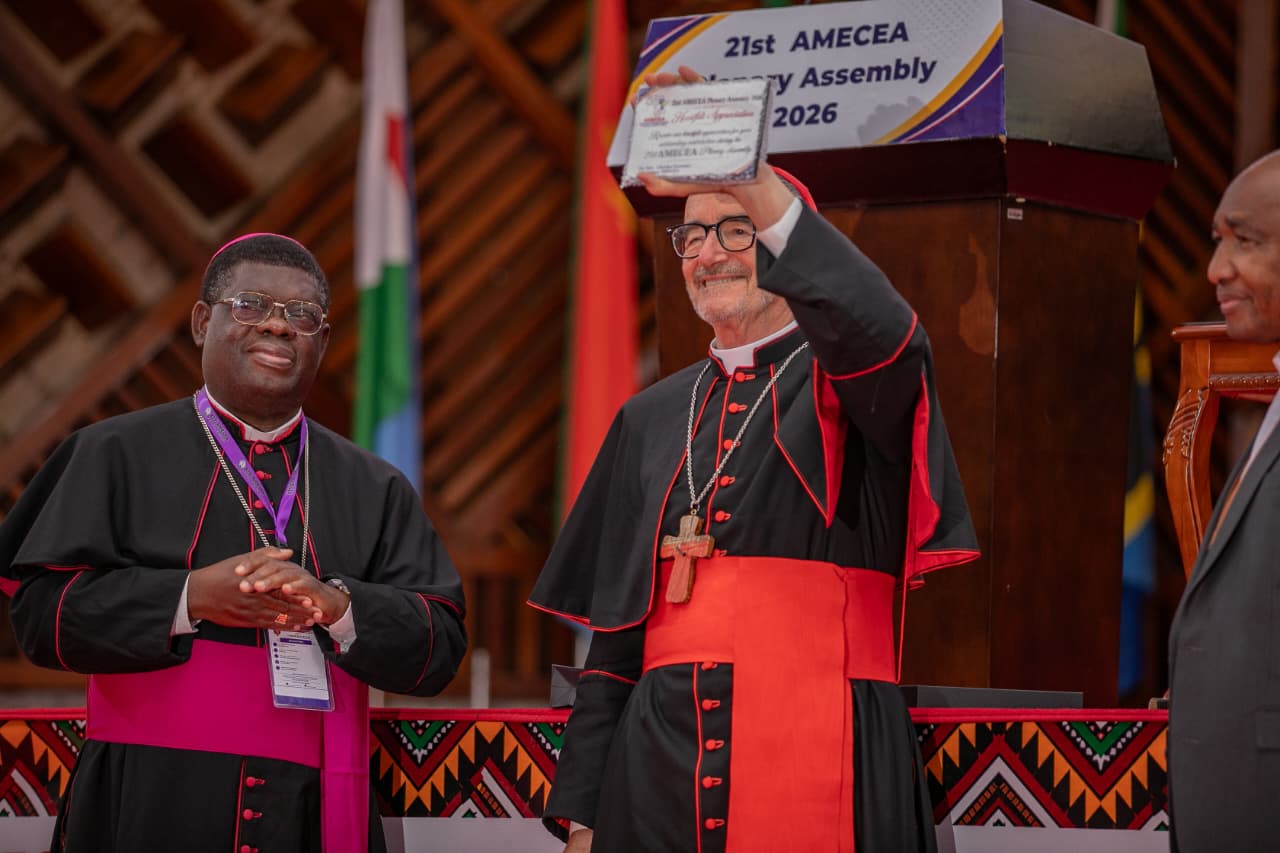
NAIROBI, Kenya (CISA) – Charity, evangelization and integral human development are not three separate tasks of the Catholic Church but “three expressions of the one missionary life of the Church,” H.E. Michael Cardinal Czerny, SJ, told bishops, clergy, religious and young delegates in a keynote address at the 21st Plenary Assembly of the Association of Member Episcopal Conferences in Eastern Africa (AMECEA).
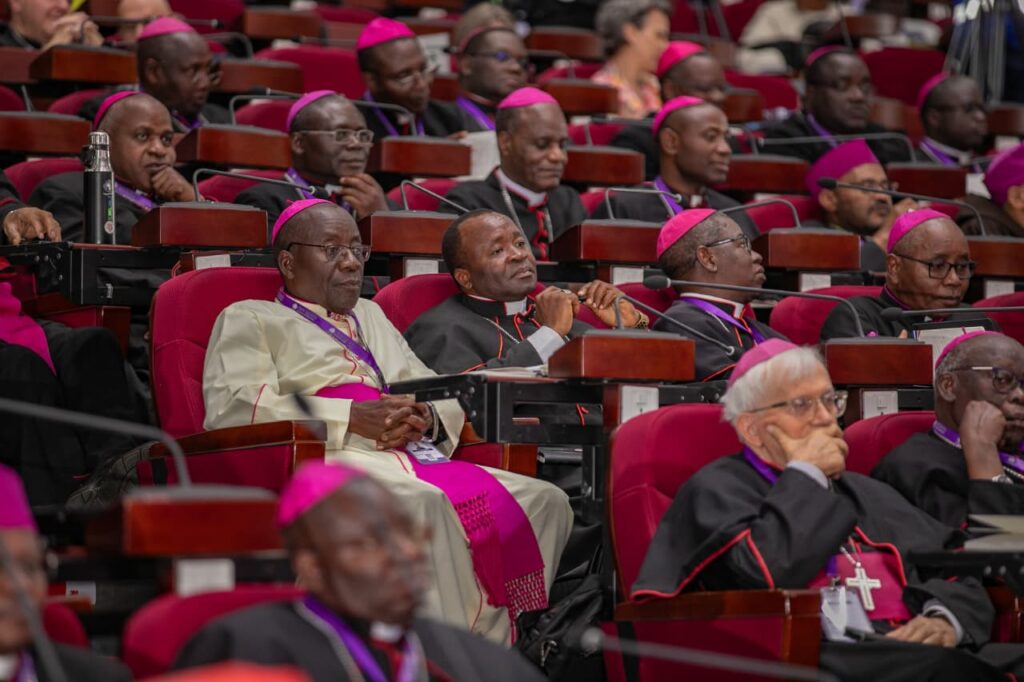
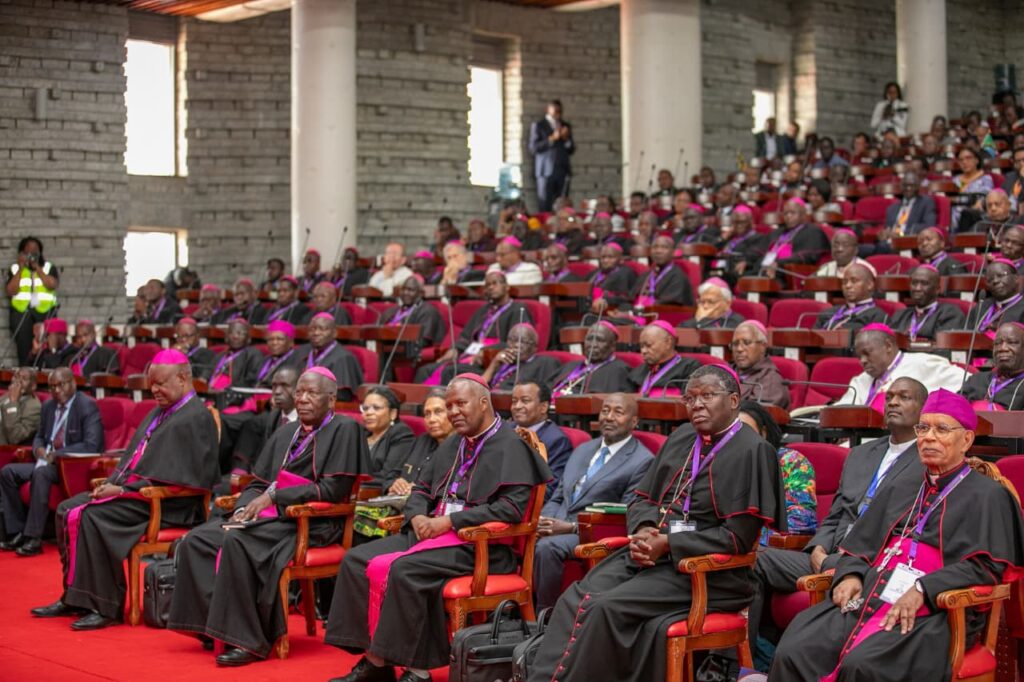
The assembly, running from July 19 to 26 at the Catholic University of Eastern Africa (CUEA) in Nairobi, has drawn an estimated 140 bishops and delegates from AMECEA’s nine member countries: Kenya, Tanzania, Uganda, Malawi, Zambia, Ethiopia, Eritrea, Sudan and South Sudan. Held every four years since AMECEA’s founding in Tanzania in 1961, this year’s gathering is themed “AMECEA’s Synodal Journey with Young People: Building Bridges of Communion, Hope, Justice and Good Governance,” and opened with a youth Mass on July 19 presided over by Cardinal Czerny before moving into business sessions this week.
Cardinal Czerny, Prefect of the Vatican’s Dicastery for Promoting Integral Human Development (DPIHD), said the three dicasteries that serve the Church’s overall mission – evangelization, charity and integral human development – ultimately “say the same thing,” rooted in Christ’s promise that all may have life “and have it abundantly.” He traced that unity back to 2017, when Pope Francis merged four pontifical councils, for health care workers, for migrants and itinerant peoples, for justice and peace, and for humanitarian assistance, into the single, integral-human-development dicastery he now leads. He noted that its mandate could equally be described as “promoting integral human progress,” since the Latin root of “development,” progressio, carries the same sense of forward movement.
Much of the address centred less on definitions than on naming concrete, on-the-ground obstacles to people’s flourishing. Cardinal Czerny read out a global list – human rights violations, economic and social injustices, insecurity and violence, unemployment and exploitation, environmental degradation, forced displacement, criminality and threats to democracy, human trafficking, sickness, drugs and arms, and humanitarian emergencies – stressing that the list remains deliberately open-ended. He set this beside findings from a DPIHD-facilitated AMECEA meeting on integral human development held in November 2024, at which regional participants identified forced migration, violence, climate change, environmental injustice, youth unemployment, job insecurity, strain on family life, bad governance and food insecurity as the pressing obstacles facing the region. “The obstacles are real obstacles,” he said, warning bishops and pastoral workers against vague talk of fighting “poverty in general” without pastoral specificity.
Naming those obstacles, he insisted, is not a political exercise but a pastoral one. “The people are the primary agents of their own development,” he said. “Our role is not to develop the people. Our role is to accompany people in overcoming the obstacles to their development.” He cautioned delegates against allowing this accompaniment to be mislabelled as political, populist or merely social action: “It is pastoral.”
That pastoral vision, he explained, is grounded in Pope Leo XIV’s first encyclical, Magnifica Humanitas, subtitled “In the Age of Artificial Intelligence,” which roots every question of development in the inviolable dignity of the human person – a dignity, he stressed, that “does not depend on a person’s abilities, wealth, position in life… nor on the right or wrong choices made by that person.” He highlighted the encyclical’s five principles of Catholic Social Teaching: the common good, the universal destination of the earth’s goods, solidarity, subsidiarity and social justice, and pointed to the late Kenyan environmentalist Wangari Maathai, cited in the encyclical, as an example of a life lived by these principles.
Turning to how the dicastery works with local Churches, Cardinal Czerny outlined a three-step methodology: listening and dialogue with bishops and their coworkers about a community’s “joys and hopes, griefs and anxieties”; theological and social-scientific reflection to translate that listening into pastoral practice; and communication and restitution, sharing effective pastoral practices back to local Churches and the wider Church. He introduced Fr. Dumisani, a DPIHD staff member present at the assembly, as the dicastery’s point of contact for this listening process.
He closed with four questions for AMECEA’s bishops and delegates to carry into the assembly’s working sessions, which run through July 26: What are the principal obstacles to integral human development in their diocese and conference? Does the local Church effectively communicate Catholic social teaching within its territory? And how can the dicastery better support communications offices in disseminating the annual papal messages for the World Days of Peace, of the Sick, of Migrants and Refugees, and of Care for Creation?
“The Dicastery for Integral Human Development stands ready to accompany your Church in offering Christ’s hope, reconciliation, development and peace to all of your people,” Cardinal Czerny said, closing with a call for the Church in Eastern Africa to become “weavers of hope.”
The 21st AMECEA Plenary Assembly is due to conclude on July 26 with the election of new AMECEA leadership and a closing Eucharistic celebration at St. Mary’s Msongari Grounds in Nairobi.
