By Paschal Norbert
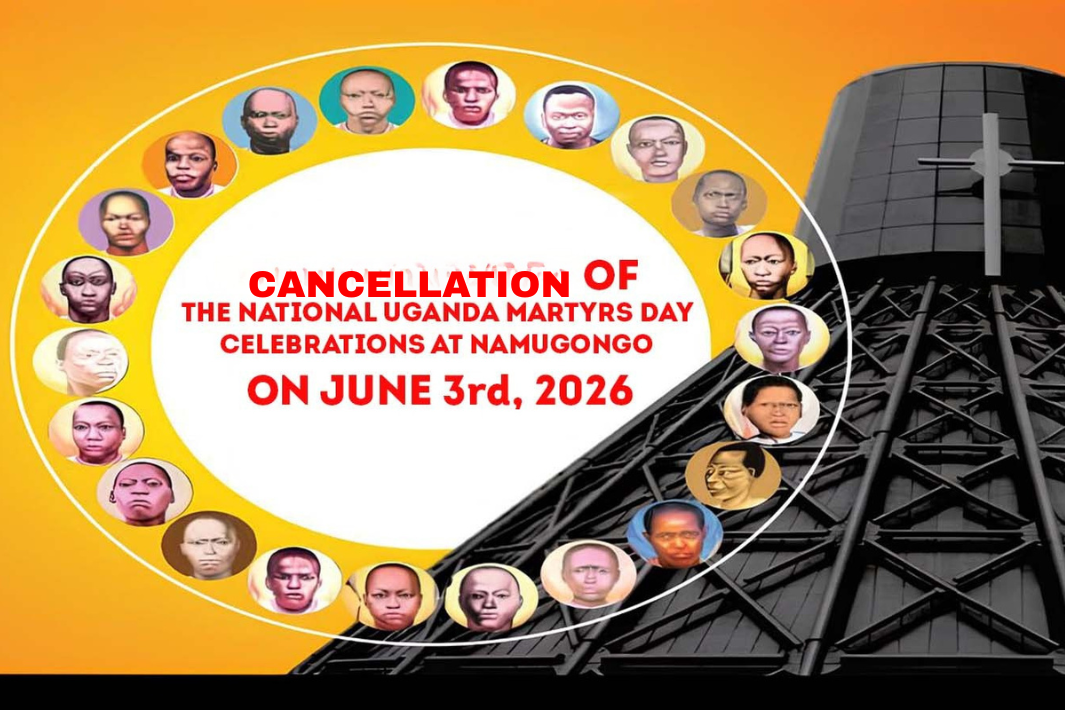
KAMPALA, MAY 29, 2026 (CISA)- The Uganda Episcopal Conference has officially cancelled the 2026 National Uganda Martyrs Day celebrations that had been scheduled to take place at Namugongo on June 3, citing the ongoing Ebola outbreak that has raised health concerns across the country and the wider Great Lakes region.
In a press release dated May 26, 2026, signed by the Chairman of the Uganda Episcopal Conference and Bishop of Kiyinda-Mityana Diocese, Rt. Rev. Joseph Antony Zziwa, the Catholic Church in Uganda announced that the annual national pilgrimage and celebrations at the historic Namugongo Catholic Shrine would not take place this year.
“Further to the guidance issued by the Uganda Episcopal Conference in the press release dated Monday, 18th May 2026, we wish to inform the Catholic faithful and all stakeholders that the national Uganda Martyrs Day celebrations at Namugongo Catholic Shrine will not take place this year. Consequently, the Diocese of Kasese will animate the celebrations in 2027,” Bishop Zziwa stated in the release.
The bishops directed that this year’s Uganda Martyrs commemoration be marked instead in dioceses, parishes, and local churches under the supervision of diocesan bishops and in consultation with government authorities.
“In the meantime, this year’s commemoration of the Uganda Martyrs shall be held at local churches under the guidance of the respective Diocesan Bishops and in consultation with the relevant Government authorities,” the statement added.
The cancellation follows an earlier communication issued on May 18 in which the Church had announced the postponement of the national celebrations as the Ebola situation escalated. Church leaders had then urged Catholics to remain prayerful and adhere strictly to health guidelines issued by the government and the Ministry of Health.
In pastoral guidance released after the postponement announcement, Bishop Zziwa emphasized that the spiritual significance of the Uganda Martyrs remains intact despite the absence of the massive national gathering at Namugongo.
“The commemoration of the Uganda Martyrs remains a profound witness of faith, courage, fidelity to Christ, and steadfast commitment to Christian values. Although the national gathering at Namugongo has been postponed, dioceses and parishes are encouraged to celebrate the day with the guidance of the Diocesan Bishop and the relevant Government authorities,” the bishops said.
The Church also called on Ugandans to continue praying for those affected by the outbreak and for frontline medical personnel battling the disease.
“Let us all join in prayers for our nation, health workers, and all those affected by the circumstances that necessitated the postponement,” Bishop Zziwa stated.
He further appealed to the public to comply with health directives aimed at containing the spread of Ebola.
“We urge you all to follow the guidelines given by the Government and the Ministry of Health,” he said.
The bishops also challenged the media to play a more proactive role in public awareness during the health crisis.
“We call upon media institutions to provide adequate coverage of the Ebola pandemic,” the statement read.
Uganda Martyrs Day, celebrated annually on June 3, is one of the largest religious gatherings in Africa, attracting millions of pilgrims from Uganda and neighboring countries including Kenya, Tanzania, Rwanda, South Sudan, the Democratic Republic of Congo, and beyond. Pilgrims usually trek for days and weeks to Namugongo to honor the 45 Christian converts who were executed between 1885 and 1887 for their faith.
This year’s cancellation marks a significant interruption to one of the region’s most important Catholic pilgrimages, underscoring the seriousness of the Ebola outbreak that has alarmed authorities in East Africa.
The outbreak has also prompted Uganda to tighten and in some instances close sections of its border with the Democratic Republic of Congo, where cross-border movement has historically contributed to the spread of Ebola during previous epidemics. Health authorities have heightened surveillance at border points, restricted public gatherings in high-risk areas, and intensified screening measures as the government seeks to contain infections and prevent a wider regional spread.
