By Paschal Norbert
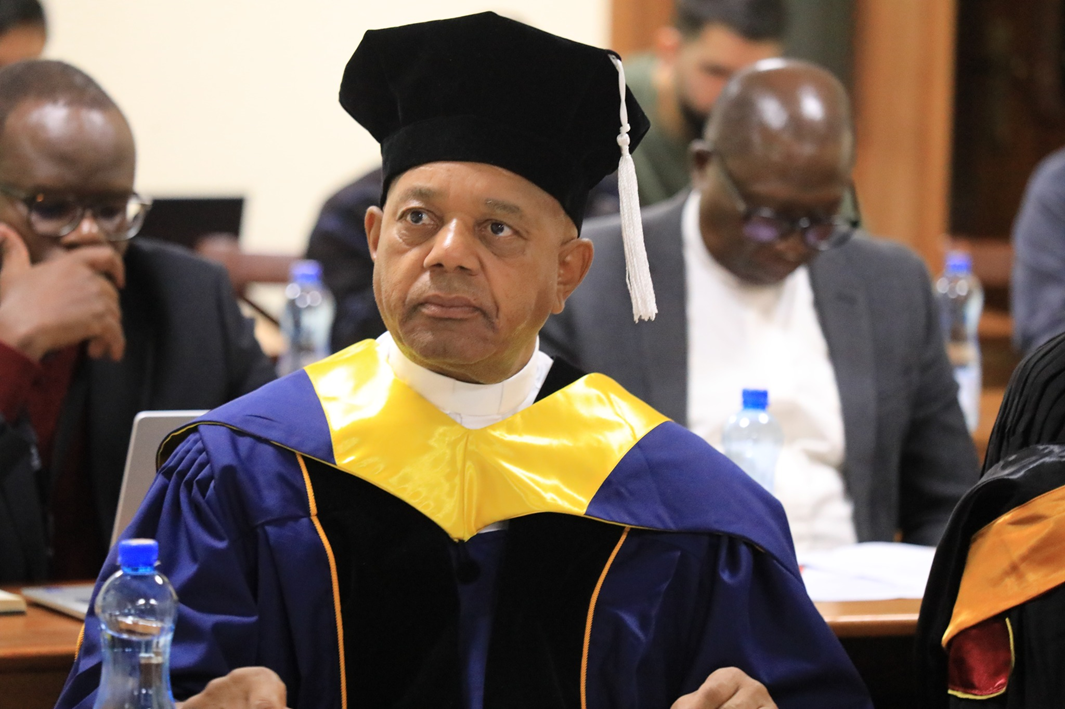
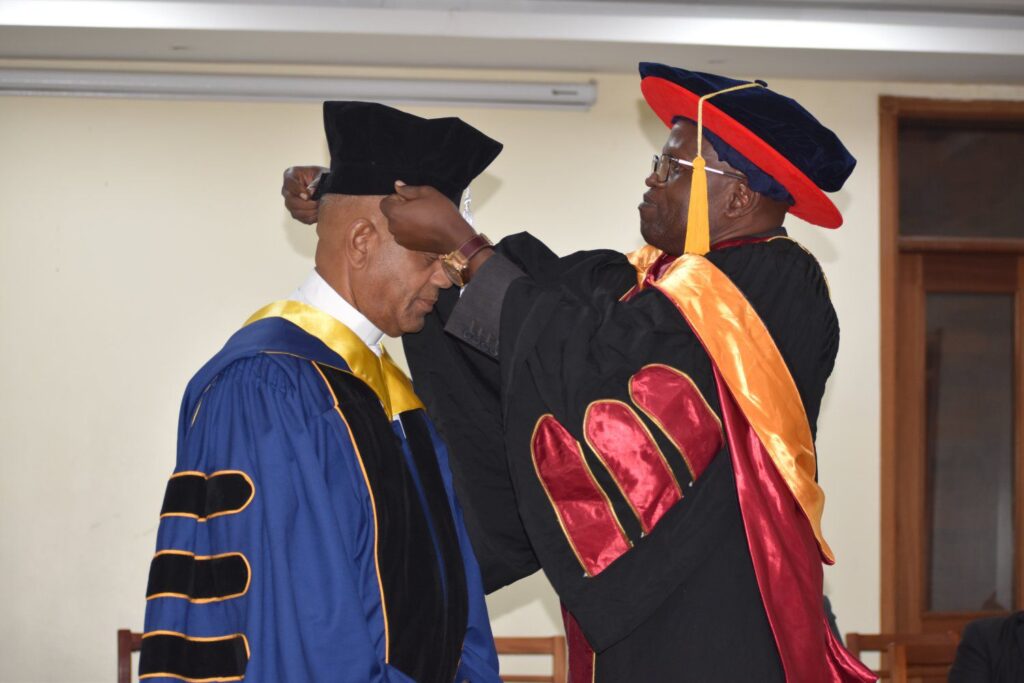
NAIROBI, MAY 29, 2026 (CISA) – Rt. Rev. Willybard Kitogho Lagho, Bishop of the Catholic Diocese of Malindi and one of Kenya’s leading voices in interreligious dialogue, has been awarded an Honorary Doctor of Theology degree by Global Ministries University (GMU), USA, in recognition of his decades-long commitment to interfaith dialogue, ecumenism, peacebuilding, and service to humanity.
The honorary doctorate was conferred during the International Interfaith Conference on Global Peace held online on May 26, 2026, bringing together respected religious leaders, scholars, and peace advocates from different parts of the world.
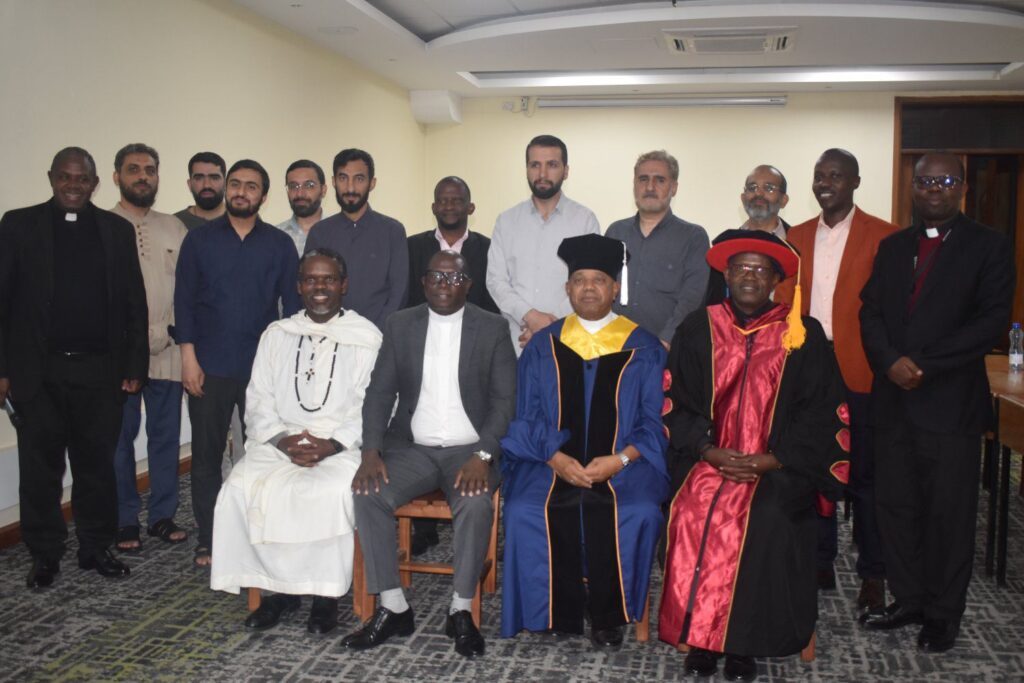
The conference, organized jointly by the Institute for Inter-Religious Dialogue and Islamic Studies (IRDIS), Tangaza University, and Global Ministries University, was held under the theme: “Interfaith Solidarity Beyond Politics,” with participants reflecting on how interfaith solidarity can promote peace, dialogue, justice, and mutual understanding in today’s society.
The event attracted voices from different faith traditions and nations, including Muslim seminarians from Iran attending the Summer Interfaith Institute sponsored by IRDIS, alongside Christian, Muslim, and Jewish leaders from the United States and Africa.
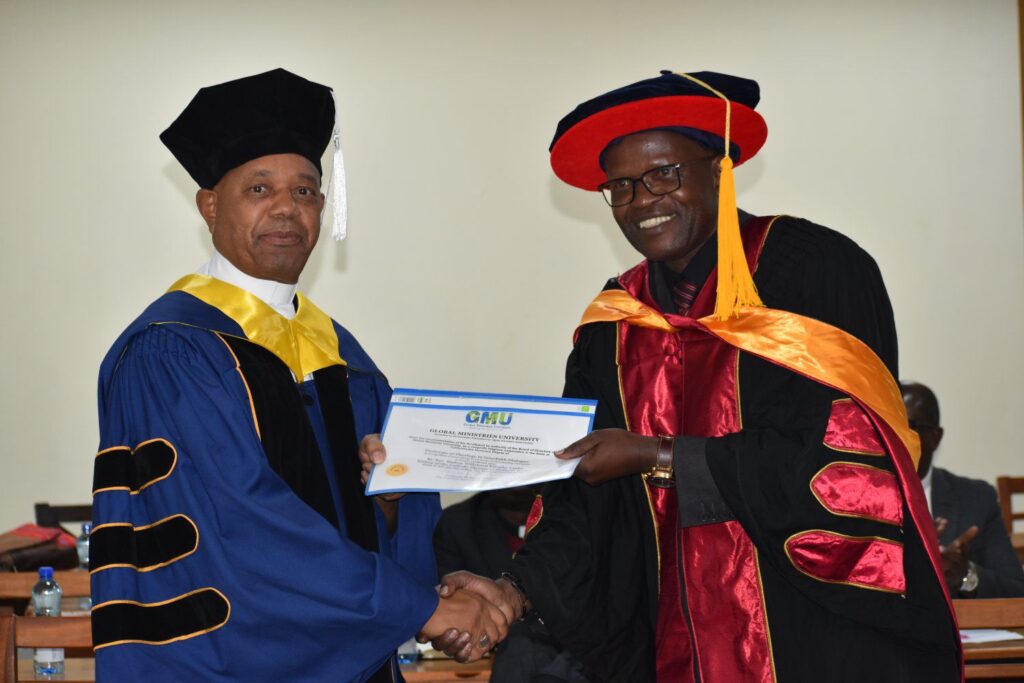
Presenting the honorary doctorate, Prof. Gerald Grudzen, President of Global Ministries University, praised Bishop Lagho for his unwavering dedication to fostering peaceful coexistence among Kenya’s diverse religious communities.
“It is my great honor and privilege, on behalf of Global Ministries University, to recognize and celebrate the remarkable contribution of Rt. Rev. Bishop Willybard Lagho to interfaith understanding and collaboration in Kenya and beyond,” Prof. Grudzen said.
“Bishop Lagho, Global Ministries University is pleased to confer upon you the Honorary Doctor of Theology degree in recognition of your many years of dedicated service to fostering interfaith understanding and cooperation among the diverse faith communities in Kenya,” he added.
Prof. Grudzen noted that GMU had worked closely with Bishop Lagho for over a decade through interfaith education initiatives and had witnessed firsthand his commitment to dialogue and reconciliation.
“For the past 13 years, Global Ministries University has had the privilege of working closely with you on numerous interfaith education initiatives in Kenya. Throughout this partnership, we have witnessed your unwavering commitment, wisdom, and ability to embody the true spirit of dialogue, mutual respect, and peaceful coexistence among people of different faith traditions,” he said.
He further cited Bishop Lagho’s growing influence in interreligious leadership both nationally and internationally, referencing his election in 2024 as Chairperson of the Kenya Conference of Catholic Bishops’ Commission for Interreligious Dialogue and Ecumenism (CIRDE), as well as his leadership role in the Inter-Religious Council of Kenya (IRCK).
The GMU President also highlighted Bishop Lagho’s contribution at the Vatican level through his service in the Dicastery for Interreligious Dialogue.
“Bishop Lagho, thank you for your tireless efforts in advancing interreligious dialogue not only across many parts of Kenya but also internationally through your service in the Interreligious Council of Kenya and your engagement with the Vatican Dicastery for Interreligious Dialogue,” he said.
Receiving the award, Bishop Lagho delivered a reflective acceptance speech tracing the roots of his passion for ecumenism and Christian-Muslim relations back to his childhood experiences in Taita Hills.
“To receive the honor of an honorary Doctorate degree from Global Ministries University is not merely a personal accolade; it is a recognition of our shared journey, a journey dedicated to the sacred work of building bridges between our faiths in the service of peace,” Bishop Lagho said.
The bishop recounted how growing up in a deeply Catholic family while studying in predominantly Anglican and later multi-faith school environments exposed him early to religious diversity and shaped his understanding of interreligious coexistence.
“My life has been deeply intertwined with the meanings of ecumenism and Christian-Muslim relations since childhood. Having been brought up in a staunch Catholic family in Taita Hills, I quickly learned how to explain and defend Catholic religious practices,” he said.
“Being part of a predominantly Anglican student population at Bura Primary School, which operated in accordance with Church Missionary Society traditions, exposed me early to religious diversity,” he added.
Bishop Lagho particularly recalled his encounters with Muslim students at St. Charles Lwanga Catholic School, experiences he said would later inspire his academic pursuit of Islamic studies.
“It was there that I formed some of my earliest Catholic friendships with Muslim students, who impressed me deeply through their commitment to attending the Friday noon prayers at the mosque nearest to the school,” he said.
“Looking back, I believe this early exposure to a multi-religious environment inspired my eventual calling to study Islam more deeply,” he added.
The bishop later pursued Arabic and Islamic Studies at the Pontifical Institute of Arabic and Islamic Studies (PISAI) in Rome, training that would become instrumental in his ministry along Kenya’s coastal region where Christian-Muslim relations remain central to social cohesion.
In his speech, Bishop Lagho also reflected on the difficult years of insecurity and radicalization along the Kenyan coast during the height of Al-Shabaab attacks around 2014.
“During my tenure as Chair of the Coast Interfaith Council of Clerics, religious leaders met frequently in an attempt to understand what was fueling mutual suspicion and hatred between Christian and Muslim communities that had coexisted peacefully for centuries,” he said.
“These were turbulent times, especially around 2014, when the shadow of Al-Shabaab fell heavily upon our nation,” he added.
He emphasized that peacebuilding required more than political pronouncements and security operations, insisting that genuine peace must emerge from within communities themselves.
“As attacks intensified and insecurity gripped our communities, collaboration among Christians, Muslims, and traditional leaders became not merely a strategy, but a matter of survival. We realized that peace could not be imposed from above; it had to be cultivated from within,” Bishop Lagho stated.
The bishop further argued that unemployment, hopelessness, social injustice, and the influence of destructive role models often drove young people toward radicalization.
“Their actions were fueled by lack of opportunities, unemployment, frustration, and, above all, by the influence of role models who held sway over their hearts and minds,” he said.
“Therefore, if we are to prevent violence, we must engage in a manner that matches the multilayered nature of the challenge,” he added.
Bishop Lagho also reflected on the realities of conflict surrounding drought, land ownership, and exploitation in parts of coastal Kenya, where he currently ministers as Bishop of Malindi.
“My ministry has taken me from the bustling streets of Mombasa to the arid lands of Malindi, where I continue to serve as a local bishop. There, I have witnessed firsthand the devastating effects of perennial floods and droughts, as well as the complex dynamics surrounding land and resource conflicts, especially during drought seasons,” he said.
“It is well documented that impoverished herders and landless farmers often find themselves in a weak position vis-à-vis wealthy and politically connected cattle owners,” he added.
Calling on religious leaders to become courageous advocates for justice, Bishop Lagho insisted that faith leaders must confront systems that perpetuate exploitation and inequality.
“Religious leaders must not only engage actively in reconciliation between victims of conflict, but must also speak directly to the architects of systemic exploitation, regardless of their social or political status,” he said.
The conference concluded with renewed calls for solidarity among faith communities and recognition that peace can only flourish through dialogue, mutual respect, and human dignity.
Profile of Global Ministries University
Global Ministries University (GMU), based in San Jose, California, is an international online graduate institution offering affordable degree programs, certificates, and continuing education in theology, ministry, interreligious studies, and peace studies.
The university serves students globally and has become particularly active in East Africa through partnerships with institutions such as Tangaza University in Nairobi. GMU focuses on training people serving in non-traditional ministries including social justice work, education, hospice chaplaincy, house churches, and community-based outreach programs.
The institution has also emerged as a key partner in organizing international interfaith conferences aimed at promoting dialogue, peaceful coexistence, and collaboration among religious communities.
Profile of Bishop Willybard Lagho
Rt. Rev. Willybard Kitogho Lagho was born on March 23, 1958, in Taita-Taveta within the Archdiocese of Mombasa. He studied Philosophy at St. Augustine’s Senior Seminary, Mabanga, from 1980 to 1982 before undertaking theological studies at St. Thomas Aquinas Major Seminary in Nairobi between 1982 and 1986.
He was ordained a Catholic priest for the Archdiocese of Mombasa on April 25, 1987.
Over the years, Bishop Lagho has served in numerous pastoral, academic, and administrative roles including parish priest, seminary rector, diocesan education director, and vicar general of the Archdiocese of Mombasa.
Academically, he earned a Master’s degree in Religious Studies from the Catholic University of Eastern Africa (CUEA) and later pursued Arabic and Islamic Studies in Cairo and at the Pontifical Institute for Arabic and Islamic Studies (PISAI) in Rome.
He taught Islamology and Interreligious Dialogue at St. Matthias Mulumba Seminary and St. Augustine’s Senior Seminary and also participated in developing interreligious dialogue curricula for Catholic institutions in Africa under the Pontifical Council for Interreligious Dialogue.
Since 2011, Bishop Lagho has played a leading role in the Coast Interfaith Council of Clerics (CICC), helping steer Christian-Muslim relations during periods of insecurity and violent extremism along the Kenyan coast.
Pope Francis appointed him Bishop of the Catholic Diocese of Malindi on December 28, 2020, succeeding Bishop Emanuel Barbara who died in 2018. He was consecrated and installed as bishop on March 19, 2021.
In April 2024, the Kenya Conference of Catholic Bishops elected him Chairperson of the Commission for Interreligious Dialogue and Ecumenism (CIRDE), further cementing his reputation as one of Kenya’s foremost advocates for peace, dialogue, and religious coexistence.
