By Paschal Norbert
ALGIERS, APRIL 14, 2026 (CISA) – Pope Leo XIV has called for deeper interreligious dialogue, unity, and a renewed commitment to prayer and charity during his meeting with the Algerian Christian community at the Basilica of Our Lady of Africa, marking a key moment in his first Apostolic Journey to Africa.
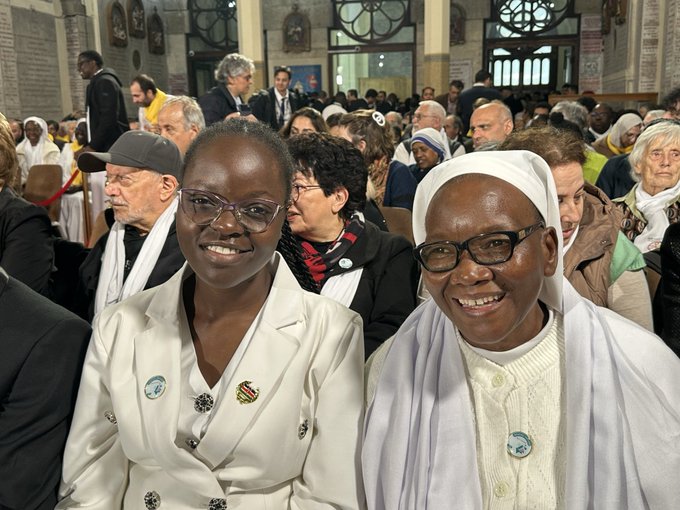
The April 13 encounter brought together clergy, religious, and lay faithful, alongside representatives from other Christian traditions and Islam, reflecting the delicate yet vibrant interfaith fabric of Algeria, where Christians are a small minority.
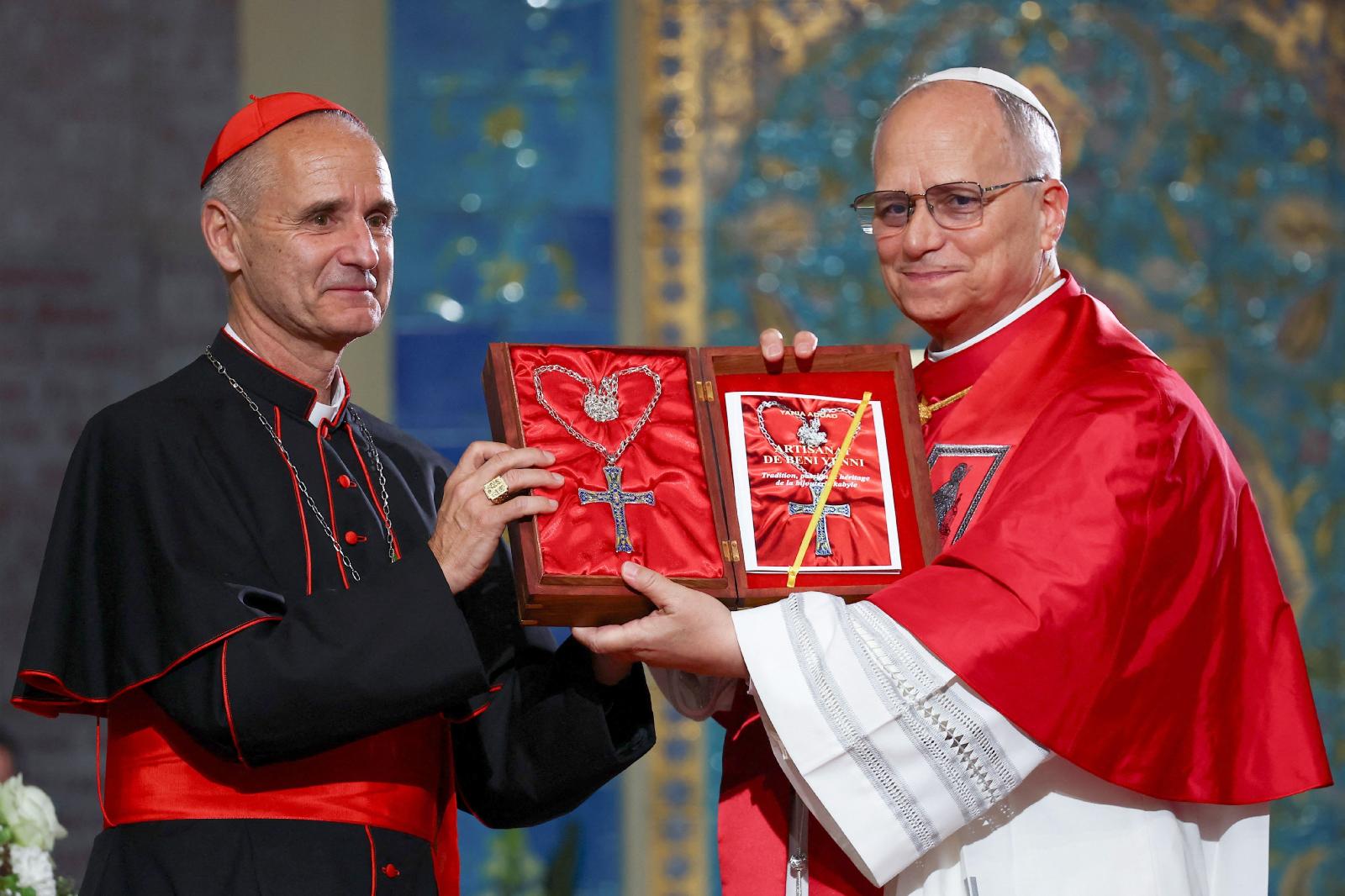
Arriving at the Basilica overlooking the Bay of Algiers, the Pope was welcomed by Cardinal Jean-Paul Vesco, local clergy, and members of the faithful, including children who presented him with flowers. The gathering featured testimonies from a religious sister, a Pentecostal student, a Basilica guide, and a Muslim woman, voices that the Pope later referenced in his address as signs of lived dialogue.
Opening his remarks with the traditional greeting, “Peace be with you,” the Pontiff expressed “profound joy and fatherly affection” in meeting what he described as a small but spiritually rich Church rooted in history and witness.
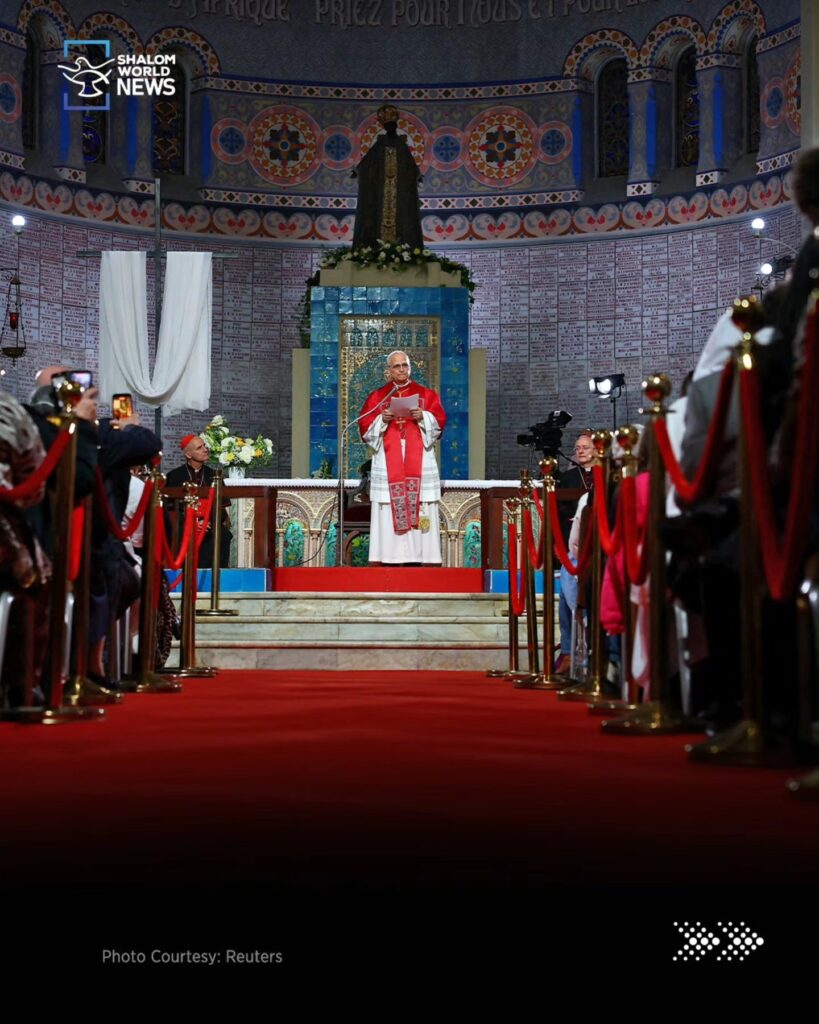
“Your community has deep roots indeed,” Pope Leo XIV said, noting that the Church in Algeria is heir to “a host of witnesses who gave their lives, motivated by love for God and neighbor.”
He made particular reference to the 19 martyrs of Algeria, whose sacrifice, he said, “is a living seed that never ceases to bear fruit.”
The Pope situated the present-day Church within the broader Christian heritage of North Africa, invoking Saint Augustine and Saint Monica as enduring figures whose legacy continues to inspire faith and dialogue.
“In this land resounded the fervent voice of Augustine of Hippo,” he said, adding that such witnesses “shine as a call to be authentic signs of communion, dialogue and peace today.”
Framing his reflection around three pillars, prayer, charity, and unity, the Pope underscored the centrality of spiritual life in sustaining Christian witness in a predominantly Muslim context.
“We all need to pray,” he emphasized, echoing Saint John Paul II, who taught that “man cannot live without prayer, any more than he can live without breathing.”
Prayer, the Pope explained, is not only foundational for individual believers but also for fostering unity and resilience within communities.
Drawing from local testimony, he highlighted how the Basilica itself serves as a place of encounter and consolation. Many, he noted, come “to enter into silence, to express their concerns, to pray for their loved ones,” often finding peace and human connection.
“Prayer unites, humanizes, strengthens and purifies the heart,” he said. “Through prayer, the Church in Algeria sows humanity, unity, strength and purity, reaching places known only to the Lord.”
Turning to charity, Pope Leo XIV reflected on the testimony of a religious sister working with children with disabilities, emphasizing that acts of service go beyond material assistance.
“Mercy and service are about more than just providing material help,” he said. “Above all, such acts become an opportunity for grace, enabling everyone involved to grow and be enriched.”
He described how simple gestures of compassion can evolve into vibrant communities of care, where “many people share moments of joy and sorrow, united by bonds of trust, friendship and fellowship.”
Such witness, he added, mirrors the example of the martyrs, who remained steadfast in love even in the face of violence. Recalling the words of Brother Luc of Tibhirine, “I want to stay with them”, the Pope highlighted a spirituality of presence rooted in solidarity with the people.
The final pillar of his reflection focused on unity and peace, themes he described as essential to both Christian identity and social cohesion. Referencing the Gospel greeting “Peace be with you,” he pointed to early Christian communities as models of harmony and shared life.
It was in this context that the Pope drew attention to the symbolic significance of the Basilica itself, describing it as a powerful embodiment of interreligious coexistence.
“This very basilica is a sign of our desire for peace and unity,” he said. “It symbolizes a Church of living stones, where communion between Christians and Muslims takes shape under the mantle of Our Lady of Africa.”
The Pontiff emphasized that faith, when authentically lived, fosters openness rather than division.
“Faith does not isolate, but opens us up; it unites us, but does not create confusion; it brings us closer, without homogenizing, and fosters true fraternity,” he said, echoing sentiments shared in testimonies during the gathering.
In a world marked by conflict and fragmentation, the Pope described the Algerian experience of coexistence as “a compelling sign” capable of inspiring broader efforts toward reconciliation.
“Together, you spread fraternity and inspire a deep longing for communion and reconciliation,” he told the faithful, praising their quiet but impactful witness.
Using the imagery of Algeria’s vast desert landscape, Pope Leo XIV offered a final reflection on human interdependence and the need for God.
“In the desert, no one can survive alone,” he said, adding “The hostile environment dispels any presumptions of self-sufficiency, reminding us that we need one another, and that we need God.”
The Algeria leg of Pope Leo XIV’s journey sets the tone for his wider April 13–23 visit to Africa, which includes stops in Cameroon, Angola, and Equatorial Guinea, countries where themes of peace, dialogue, and pastoral presence are expected to remain central.
