By Francisco Martinez
On Sunday, May 17, 2026, history quietly turned a page at Materi Catholic Parish in the Catholic Diocese of Meru. What unfolded was not simply an administrative handover, but the closing of a missionary chapter that had shaped the faith, education, healthcare, and social life of generations in Tharaka.
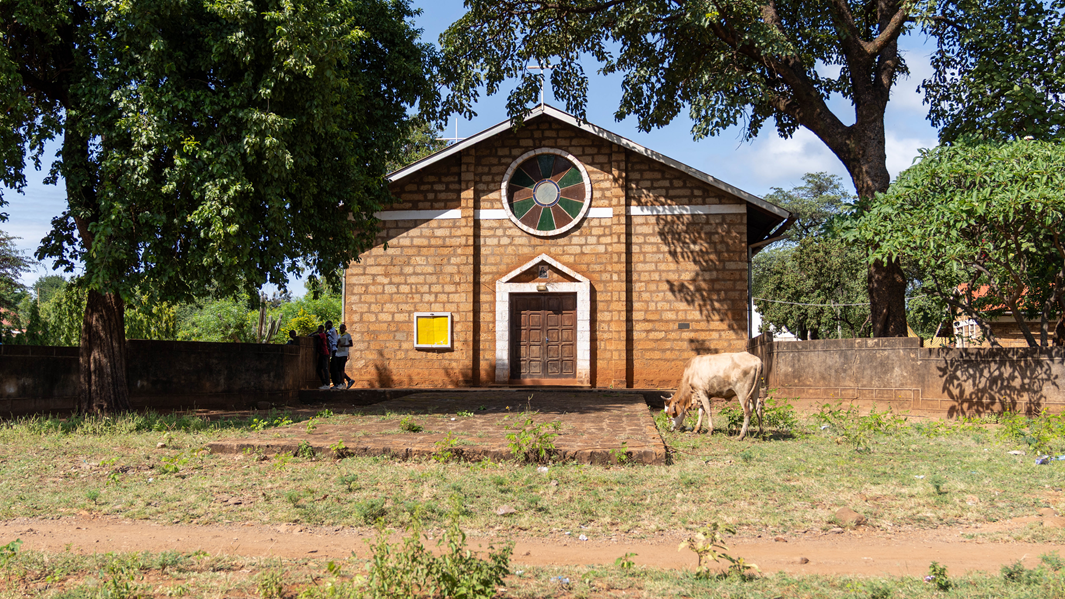
After 79 years of missionary presence, the Consolata Missionaries officially handed over Materi Parish, regarded as the first Catholic parish established in the larger Tharaka Nithi region, to the Diocese of Meru.
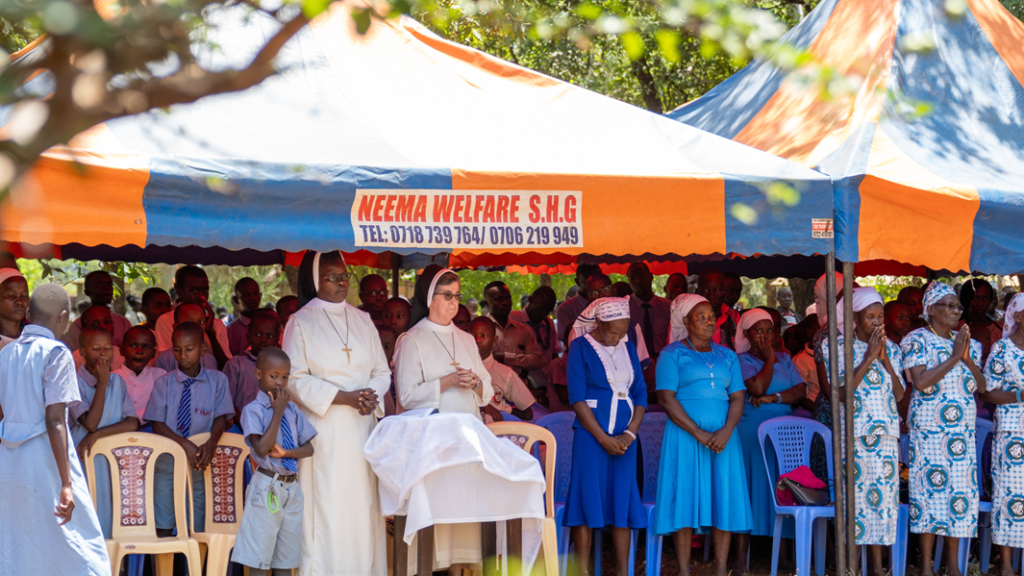
The celebration, prepared for over several weeks, drew together priests, religious, catechists, parish groups, schools, local leaders, and hundreds of faithful from across the region. It was both solemn and joyful: a thanksgiving for a mission lived faithfully and a hopeful beginning for the local Church now ready to carry the journey forward.
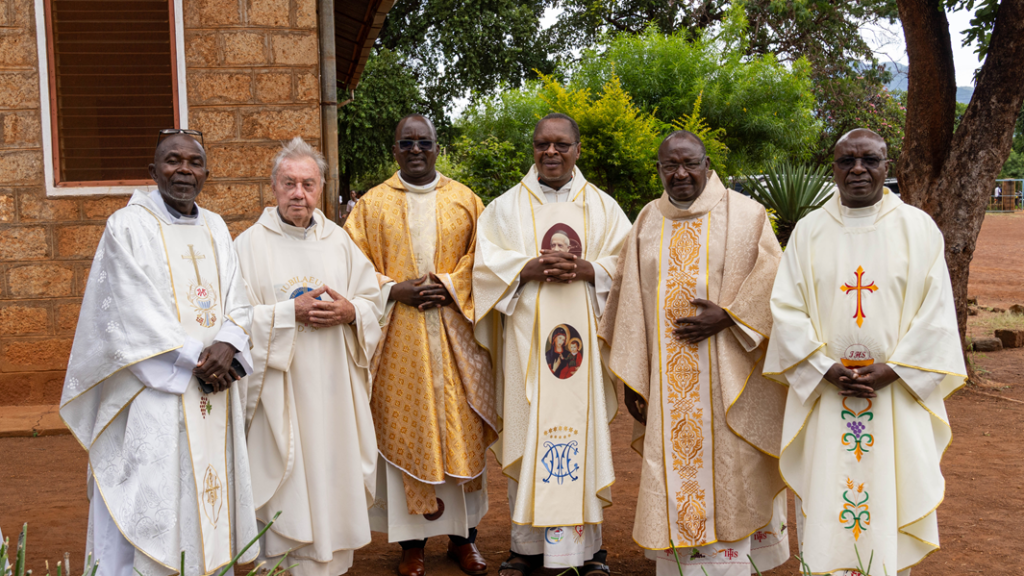
The Eucharistic celebration was presided over by Fr. Zachary Kariuki, IMC, Regional Superior of the Consolata Missionaries, who had spent the preceding days in Materi overseeing the smooth transition process. He was joined by the Vicar General of the Diocese of Meru, Fr. Linus Kinyua Kiraithe, alongside several Consolata missionaries who had served the mission over the years.
For many, however, the day was more than a ceremony. It was the culmination of nearly eight decades of missionary life in a land once defined by hardship, drought, and isolation.
Materi, sometimes written as Matiri in older English and Italian missionary documents, is located in the arid Tharaka region of north-central Kenya within the Diocese of Meru. For decades, this was a harsh land where drought was not an occasional crisis but part of daily existence. Water was scarce, families walked long distances for basic services, and opportunities for education or healthcare were limited. Yet it was here that the Consolata Missionaries chose to stay.
When the missionaries arrived in 1947 and established Materi Parish, they planted more than a church structure. They planted presence. They rooted themselves among the people with the conviction that even in difficult soil, faith and human dignity could flourish.
To this day, many people across the region still simply call the area “Materi Mission.” The name itself has become part of the collective memory of the community, a reminder that an entire social and spiritual life grew around the small missionary outpost that slowly became a center of hope.
Over the years, the missionaries learned quickly that evangelization could not be separated from the realities facing the people. The Gospel had to walk alongside daily struggles.
One of the greatest turning points came in the 1970s through the efforts of Fr. Andrew Maggiorino Botta, IMC, together with Br. John Koczka, an American educator. Living among the people of Materi, they understood that without water, no meaningful development could take root.
In 1973, Fr. Botta launched an ambitious campaign to raise funds for pumps, pipes, engines, and water tanks to channel water from the Mutonga River to the mission and surrounding communities. It was not merely a development project; it was an investment in the future of an entire people. The water eventually came , and with it came transformation.
The same year, Fr. Botta and Br. Koczka established Materi Girls Centre, which initially operated within the parish compound itself. Given the fact that more land and facilities were necessary, especially an improved water supply, Brother John moved the school up to its present site, near Tunyai and the Kithino River, on a 205-acre plot. But before leaving the catholic mission, construction had started on a girls’ dormitory, a building that later became the Materi Boys High School tuition block and administrative office, a school where the current Bishop Joseph Murugara, IMC, and the current ordinary of Meru is an alumni.
Like many missionary initiatives, the parish became far more than a place of worship. It evolved into the heart of the community, giving birth to schools, social projects, and programs that would shape generations.
Education soon became one of the mission’s strongest pillars. From Materi Girls Centre to Materi Boys High School and several surrounding schools, opportunities slowly opened for children in a region where access to formal education had once been minimal.
Healthcare followed a similar path. What began as a small dispensary gradually developed into St. Orsola Mission Hospital Matiri, a level four hospital now under the diocese of Meru, today recognized as a major health facility in the region. For countless families, the hospital became a place of healing and accompaniment, witnessing births, illnesses, recoveries, and the everyday struggles of rural life.
The water project also transformed community development. Beyond quenching thirst, it improved farming, supported schools, and created possibilities where survival had once seemed the only option.
Many missionaries walked this journey with the people of Materi and became part of the community’s story. Among them were Fr. Wilfred Gikundi, IMC, and Fr. Orazio Mazuki, IMC, whose names remain deeply remembered. In some families today, Italian names given to children stand as quiet tributes to the missionaries and volunteers who shared life with the community in simplicity and friendship.
As the years passed, Materi slowly ceased being merely a mission station. It became a living local Church.
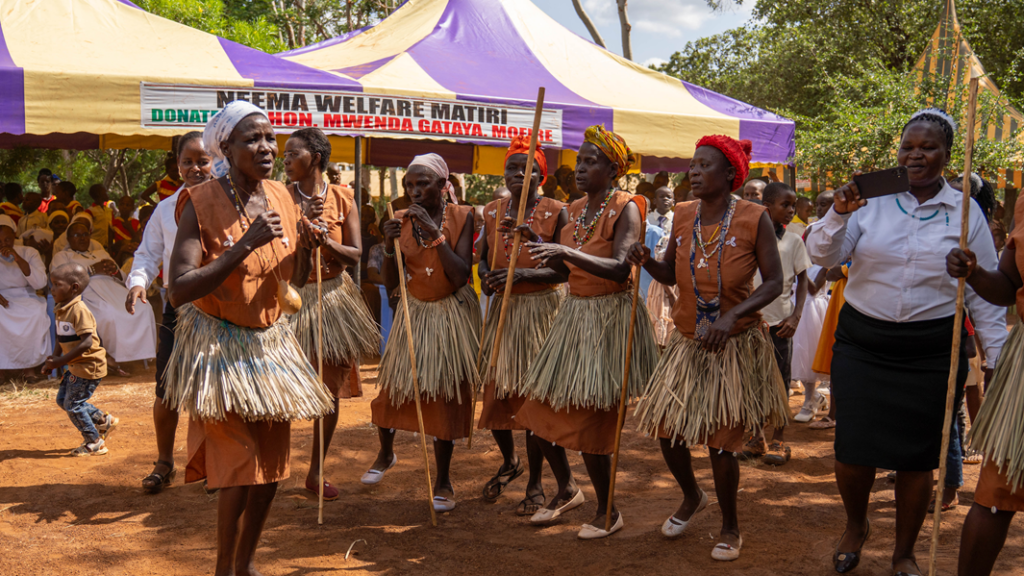
That reality was visible throughout the handover celebration on May 17. Traditional Tharaka songs and dances filled the parish grounds as women from the local community expressed gratitude to the missionaries while welcoming the new parish priest. The atmosphere carried memory, emotion, and pride.
At the center of the liturgy came one of the most symbolic moments of the day.
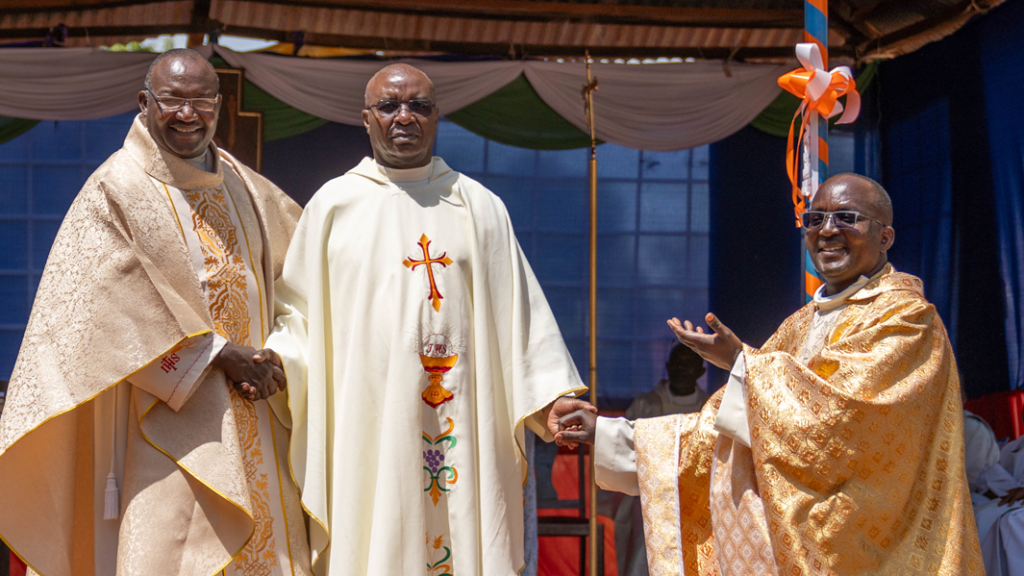
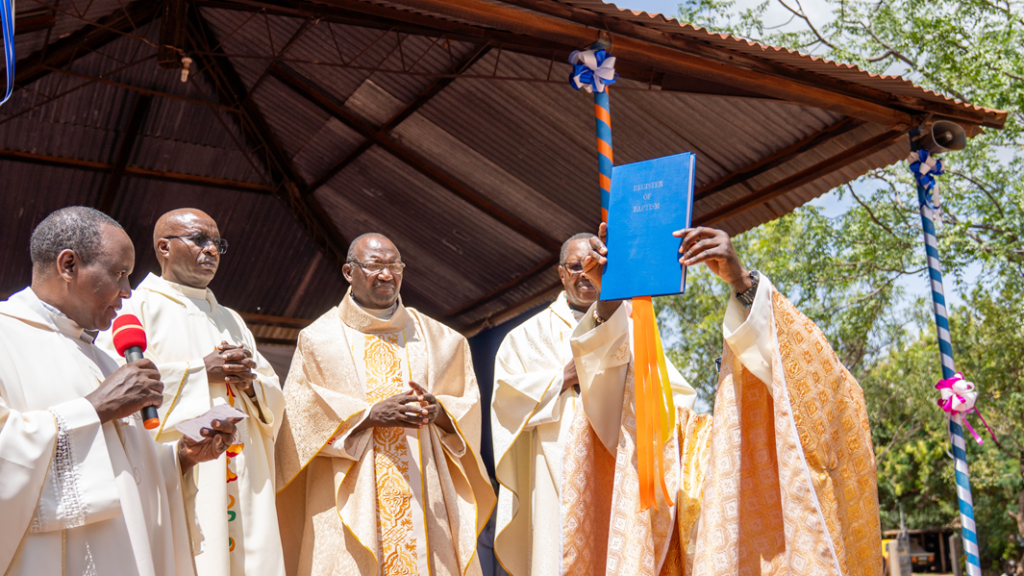
Fr. Matthew Kamwara, IMC, the last Consolata parish priest in Materi, formally handed over the parish keys and sacramental registers. Within those books lies the spiritual history of generations: baptisms, confirmations, marriages, and funerals, the faith journey of an entire people preserved through decades.
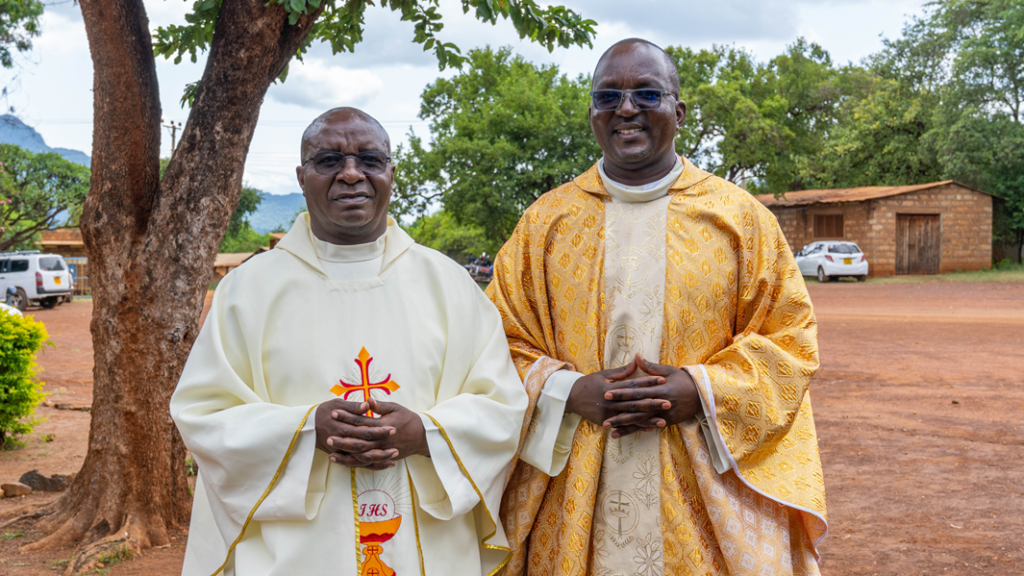
The handover then followed the traditional ecclesial process. The Christian community entrusted the parish to Fr. Zachary Kariuki, IMC, who in turn handed it to Fr. Linus Kinyua Kiraithe on behalf of the Diocese of Meru. The Vicar General then officially introduced the new parish priest, Fr. Nicasio Nkune.
For the Diocese, the appointment of Fr. Nkune carries profound meaning.
Ordained on December 19, 1998, Fr. Nkune served for sixteen years as a professor and formator at St. Thomas Aquinas Seminary in Nairobi. He also holds a Master’s degree in Spiritual Theology from the Pontifical University of the Holy Cross in Rome. Now, he becomes the first diocesan priest to assume pastoral leadership of Materi Parish.
That transition represents far more than administrative continuity. It reflects the maturity of the local Church, the very dream missionaries hope to see fulfilled. After 79 years, the seed planted by the Consolata Missionaries has borne fruit: a Church capable of standing on its own, guided by local clergy and rooted deeply within its own people.
This has always been the deeper meaning of missionary work, not to create dependency, but to nurture a community strong enough to continue the journey independently.
The story of Materi, therefore, is not ending. The Consolata Missionaries arrived in a dry and difficult land and walked patiently with its people for nearly eight decades. Together they built schools, developed healthcare, brought water, nurtured vocations, celebrated sacraments, buried the dead, and accompanied families through every season of life.
Today, as they step back from the direct administration of the parish, what remains behind is not simply infrastructure or institutional memory. What remains is a living Church.
The handover of Materi Parish to the Diocese of Meru stands as one of the clearest signs that the mission succeeded. A true missionary does not cling to what he built; he rejoices when the community becomes strong enough to carry the faith forward on its own. And so, after 79 years, the mission in Materi continues, alive in the faith, memory, and lives of its people.
