By Paschal Norbert
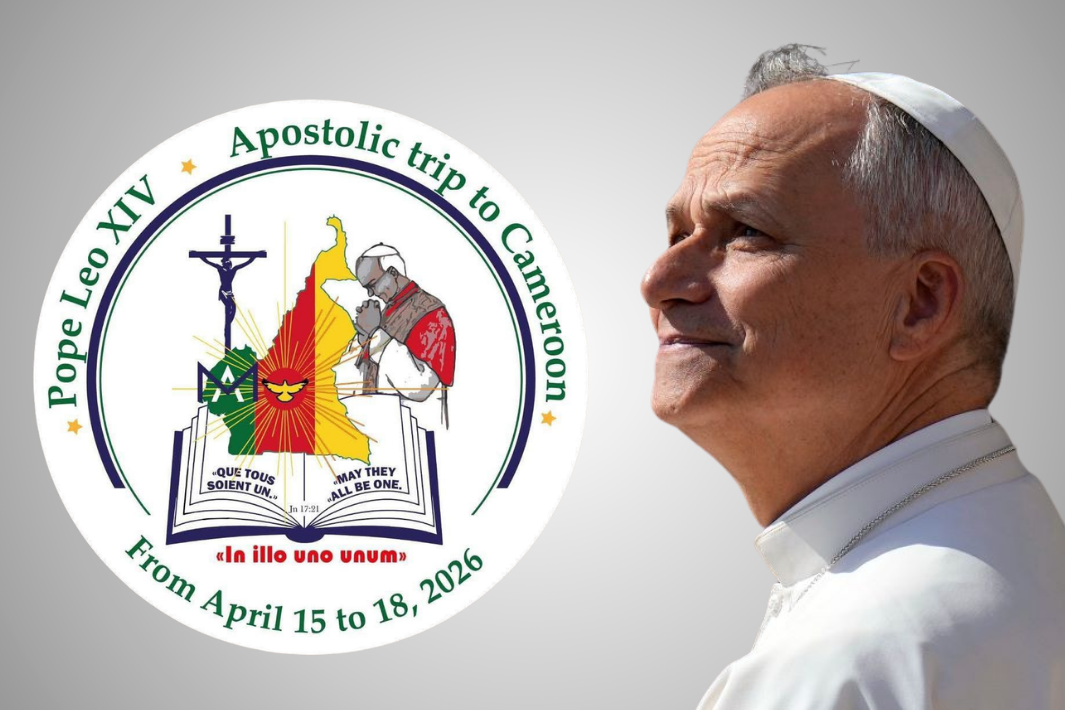
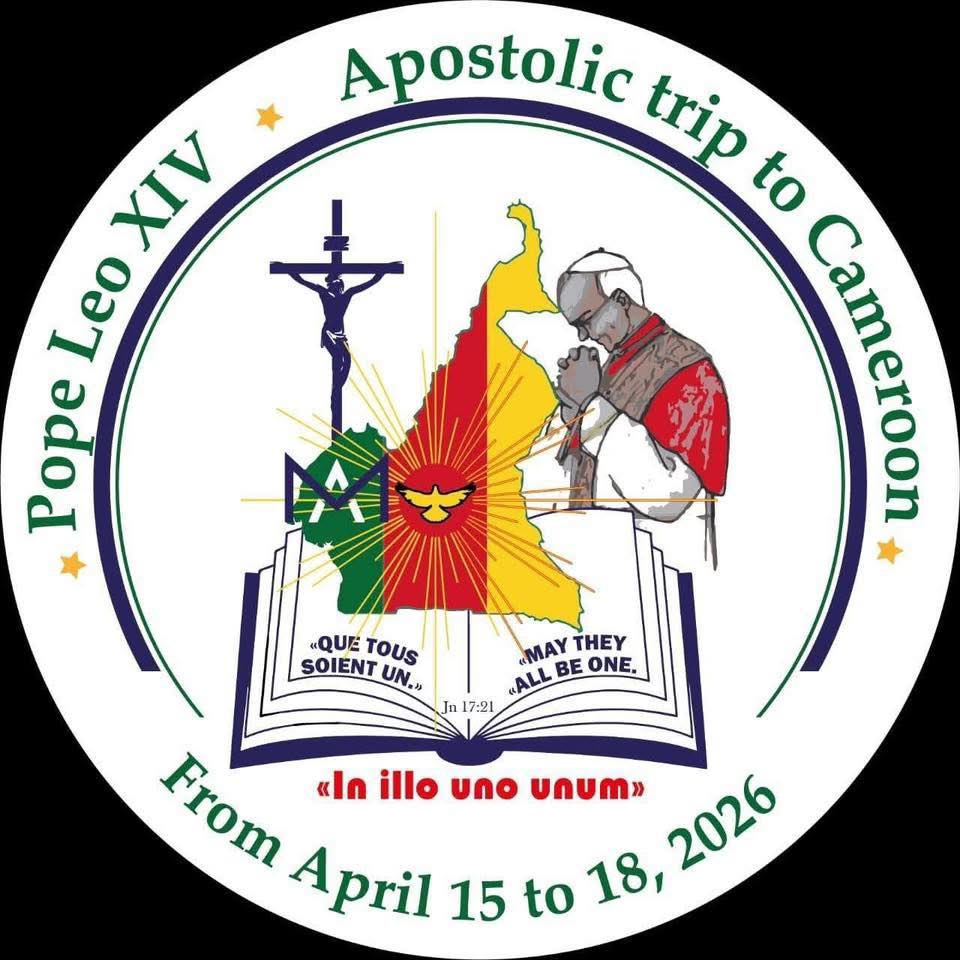
YAOUNDÉ, MARCH 6, 2026 (CISA) – The National Episcopal Conference of Cameroon (CENC) has unveiled the official logo for the historic Apostolic Visit of Pope Leo XIV to Cameroon scheduled for April 15 to 18, 2026, marking a significant milestone as the country prepares to welcome the Pontiff for his first visit to the Central African nation.
The emblem, released amid growing anticipation across the country, presents the upcoming papal pilgrimage not merely as a diplomatic or ceremonial event but as a spiritual call to renewal, unity and prayer for Cameroon’s faithful and the wider society.
Church leaders say the carefully designed symbol reflects themes deeply rooted in Scripture and Catholic teaching, highlighting hope, reconciliation and the call to communion inspired by the Gospel message “Ut omnes unum sint”—“That they may all be one” (John 17:21).
Four-Nation African Apostolic Journey
The unveiling of the logo comes after the Holy See Press Office confirmed that Pope Leo XIV will undertake a 10-day Apostolic Journey to Africa from April 13 to 23, 2026, visiting Algeria, Cameroon, Angola and Equatorial Guinea.
According to the Vatican, the Pontiff will be in Cameroon from April 15 to 18, with scheduled stops in Yaoundé, the political capital, Bamenda in the Northwest Region, and the economic hub of Douala.
The Government of Cameroon has confirmed that the visit will take place at the invitation of President Paul Biya. In a statement signed by Mvondo Ayolo, Minister and Director of the Civil Cabinet at the Presidency, authorities said preparations were underway to receive the Pope in the three cities listed in the official itinerary.
Third Papal Visit to Cameroon
The upcoming journey will mark the third time a reigning Pontiff visits Cameroon.
The country previously hosted St. John Paul II, who made pastoral visits in 1985 and again in 1995, and later welcomed Pope Benedict XVI in 2009, when he launched the Instrumentum Laboris for the Second Special Assembly for Africa of the Synod of Bishops.
Church leaders say Pope Leo XIV’s visit will therefore continue a historic tradition of papal engagement with the Church in Cameroon.
Church Welcomes “Messenger of Peace”
Archbishop Andrew Nkea Fuanya of Bamenda, who also serves as President of the National Episcopal Conference of Cameroon, expressed profound joy at the announcement.
“It is with great joy that we received the announcement of the Pope’s visit to Cameroon,” Archbishop Nkea said, noting that he welcomes the visit both as a Catholic and as the archbishop of one of the dioceses the Pontiff will visit.
Describing the Pope’s mission, the prelate said the Holy Father would arrive as “a messenger of peace, an ambassador of reconciliation and a promoter of justice.”
Reflecting on the country’s current challenges, Archbishop Nkea added: “If things were going well, we would not have expected the Holy Father to come to Cameroon. He is coming precisely because things are not going well.”
Symbolic Visit to Crisis-Hit Bamenda
Particular attention is focused on Bamenda, located in the conflict-affected Northwest Region, which has been at the center of the Anglophone crisis since 2016.
The crisis began as protests by English-speaking lawyers and teachers over perceived marginalization but later escalated into armed confrontations between separatist groups and government forces.
The violence has resulted in over 1,800 deaths, the internal displacement of about 500,000 people, and the flight of tens of thousands of refugees, particularly to neighboring Nigeria.
Observers note that the Pope’s decision to visit Bamenda carries powerful symbolic significance, placing one of the hardest-hit regions at the center of the papal itinerary.
Many Catholics and civil society actors hope that the Pope’s presence could encourage dialogue and inspire renewed efforts toward peace and reconciliation.
The announcement of the visit has generated widespread excitement across Cameroon’s Catholic community and beyond, with political leaders, clergy, and faithful seeing the event as an important moment for national reflection
