
By Paschal Norbert
ACCRA, MAY 6, 2026 (CISA)- The Symposium of Episcopal Conferences of Africa and Madagascar (SECAM) has strongly condemned the recent wave of xenophobic violence targeting African migrants in South Africa, describing the attacks as a grave assault on human dignity, African solidarity, and the continent’s shared values.
In a press statement issued from Accra on May 5, Cardinal Fridolin Ambongo, SECAM President and Archbishop of Kinshasa, expressed deep concern over what he termed “acts of xenophobic violence against nationals of other African countries,” warning that the attacks threaten not only individual lives but also the moral conscience of the continent.
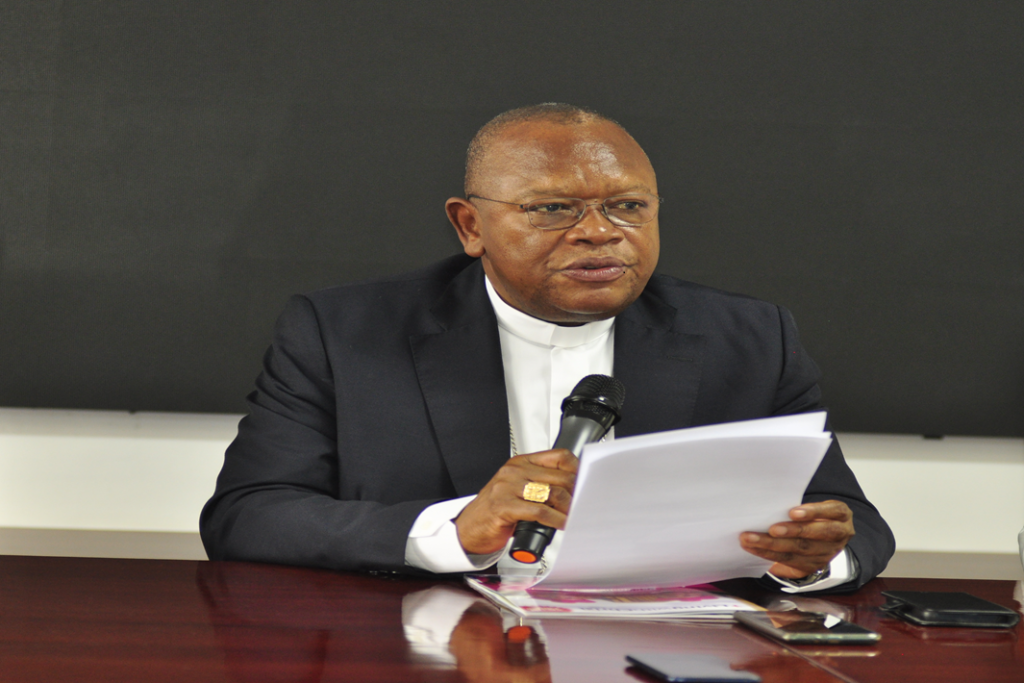
“The Symposium of Episcopal Conferences of Africa and Madagascar, the body for communion, consultation, and coordination of the Catholic Church in Africa and the neighbouring islands, is deeply concerned about the recent events in the Republic of South Africa, which have been marked by acts of xenophobic violence against nationals of other African countries,” Cardinal Ambongo said in the statement.
He further expressed solidarity with the Southern African Catholic Bishops’ Conference for what he described as its “prophetic stance” in defending migrants and victims of discrimination.
“In these particularly grave circumstances, SECAM expresses its fraternal and ecclesial solidarity with the Southern African Catholic Bishops’ Conference for its prophetic stance in support of African migrants who are victims of discrimination and xenophobia. It also extends its sympathy to all victims of this violence and to their families, who have been severely affected,” Cardinal Ambongo stated.
Framing the crisis within the Church’s teaching on human dignity, the SECAM President said the violence represented a direct contradiction of the Christian understanding of the human person.
“At the heart of this crisis lies a fundamental challenge to the human conscience. Biblical revelation teaches that every person is created in the image and likeness of God, a truth that underpins the infinite dignity of every human being, regardless of their origin, nationality, tribe, culture, or migration status. SECAM strongly reiterates that this dignity must remain the primary criterion for all social organisation and public policy,” he stated.
He warned that attacks against foreigners undermine both Christian teaching and Africa’s vision of fraternity.
“Any violence directed against foreigners constitutes not only a grave violation of the human person but also a negation of the foundations of universal brotherhood and the Africa we want,” Cardinal Ambongo said.
While acknowledging the sovereign right of states to regulate migration, SECAM also called on migrants to respect the laws and customs of host countries, invoking the teaching of the Catechism of the Catholic Church.
“SECAM reaffirms the need for a balance between the legitimate sovereignty of states and the imperative requirement for migrants to respect the laws and customs of their host country,” the statement read.
Cardinal Ambongo said the violence witnessed in South Africa represented a betrayal of core African principles: “The acts of violence recently witnessed in South Africa constitute a serious violation of African principles and continental law. They undermine the fundamental rights guaranteed by the African Charter on Human and Peoples’ Rights, notably the right to life, dignity, security, and equality before the law. They also contradict the continent’s core values, such as African solidarity, the spirit of Ubuntu—‘I am because we are’—and the ideals of Pan-Africanism and African Renaissance.”
SECAM called on the government of South Africa to take immediate action to protect all persons living within its borders and to prosecute those responsible for the attacks.
“In light of this situation, SECAM calls on the Government of the Republic of South Africa to take urgent, concrete, and sustainable measures to ensure the protection of all persons living on its territory, in accordance with its continental and international commitments. It urges the Government to conduct impartial investigations, identify and prosecute those responsible for these acts, put an end to all forms of vigilante justice, and strengthen the legitimate authority of the State,” appealed the continental body of Catholic bishops.
The Church body also urged the African Union to activate continental mechanisms to prevent further xenophobic violence : “SECAM also calls on the African Union to fully assume its role as guardian of continental values, to ensure the effective implementation of African legal instruments on human rights, and to encourage the establishment of prevention and early warning mechanisms against xenophobic violence.”
In a pastoral appeal, Cardinal Ambongo urged Africans to reject hatred and rediscover fraternity, “Following the example of the Good Samaritan, we are all called to rediscover an ethic of closeness, where the stranger is not perceived as a threat but recognised as a brother or sister of whom we are the guardians.”
Background to the South African Crisis
The latest unrest in South Africa is part of a recurring cycle of anti-migrant violence that has periodically erupted since the end of apartheid, notably in 2008, 2015, 2019, and now again in 2026. The violence is often fuelled by deep socio-economic frustrations, including unemployment, inequality, housing shortages, crime, and pressure on public services. Migrants from countries such as Nigeria, Zimbabwe, Ghana, Mozambique and Ethiopia have often become scapegoats during periods of economic hardship.
In recent weeks, protests in cities including Johannesburg and Pretoria have escalated into attacks on foreign nationals, prompting diplomatic protests from several African governments. Reuters reported this week that at least 130 Nigerians in South Africa requested repatriation following the violence, while South African authorities pledged investigations and prosecutions after protests from Ghana and other African states.
According to Crux, church leaders in Southern Africa have warned that migrants are increasingly being scapegoated for structural economic failures rather than the root causes of poverty and unemployment, raising concerns that the violence could further strain South Africa’s relations with fellow African nations.
